

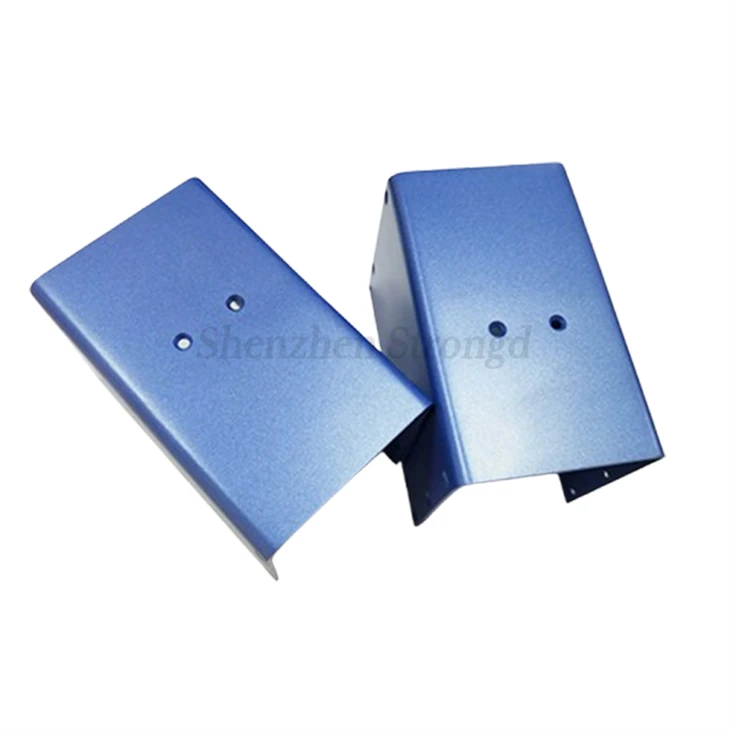

In modern manufacturing, the "lightweight, high-precision, and strong adaptability" of structural components have become key drivers for equipment performance upgrades. Aluminum precision frame parts are the core solution to meet these demands - using aluminum alloy as the base material, they achieve micron-level tolerance control through precision machining. They retain the mechanical strength of metal materials while significantly reducing equipment weight due to aluminum's low density. Widely applied in high-end fields such as electronics, automation, and medical devices, they serve as a critical bridge connecting "design creativity" with "industrial implementation."
Application
CNC milling and turning machining is widely used in the following fields due to its flexibility and high precision:
Automobile Manufacturing
such as engine housing, transmission shaft and other structural parts which have high requirements on strength, symmetry and surface roughness
Medical Equipment
Surgical tool handles, stainless steel stent bodies which
Must meet standards such as burr-free, pollution-free, and corrosion-resistant
Electronic Communication
Signal transmission housing, radiator, metal frame
Small size, complex structure, high batch consistency requirements
Industrial Machinery and Automation
Such as the Couplings, fixed seats, guide rail components
--Repetitive load performance and structural accuracy must be reliable
Advantages
Balancing Lightweight Design and Mechanical Performance
The density of aluminum alloy is only about one-third that of steel. Under equivalent structural conditions, the weight of an aluminum frame can be reduced by 40%-60%, directly lowering the operational load of equipment (such as moving mechanisms in automation systems or drone fuselage frames). At the same time, by utilizing high-strength aluminum alloys like 6061 and 7075, combined with precision machining and structural optimization (e.g., reinforcement ribs, hollow topological designs), its tensile strength can reach 180-500 MPa. This ensures sufficient resistance to vibrations, impacts, and other operational stresses, achieving a "lightweight yet robust" performance.
Ensuring High Precision and Consistency
Relying on equipment such as CNC machining centers and five-axis linkage machine tools, the machining tolerances of aluminum precision frames can be controlled within ±0.01mm to ±0.05mm (depending on structural complexity). Geometric tolerances, including flatness and perpendicularity, can be consistently maintained within 0.02mm/m. This level of precision ensures seamless integration of frames with other components (such as sensors, motors, and circuit boards), preventing operational errors caused by assembly gaps. It is particularly suitable for scenarios with stringent requirements for "fit accuracy," such as precision instruments and optical equipment.
Compatibility of Corrosion Resistance and Machinability
The surface of aluminum alloy can form a dense protective film through processes such as anodizing and passivation, achieving a salt spray resistance of over 2,000 hours, making it suitable for harsh industrial environments like humidity and dust. Additionally, aluminum's excellent machinability enables the integrated processing of complex structures (such as irregular cavities, multi-dimensional holes, and threaded grooves) without relying on mold development as plastic parts do. This significantly shortens the iteration cycle for samples.
Controllability of Cost and Lead Time
Compared to high-end materials like titanium alloy, aluminum alloy offers lower raw material costs, and its machining energy consumption is only half that of steel. Additionally, the "on-demand production" model of precision machining eliminates the need for mold investment (offering significant advantages for small-batch orders). The delivery timeline from design to finished product can be compressed to 7–15 days, aligning perfectly with modern manufacturing demands for "small-batch, multi-variety" production
Custom Service
The production of aluminum precision frames involves comprehensive process control encompassing "material selection + machining processes + quality inspection." A typical workflow is as follows:
Step 1: Material Selection and Preprocessing
Based on client requirements, select the appropriate aluminum alloy grade (e.g., 6061 for general structures, 7075 for high-strength applications). Preprocess aluminum profiles or plates, including solution heat treatment (to enhance material strength) and surface cleaning (to remove oil stains and oxide layers), ensuring the stability of raw material performance.
Step 2: Precision Machining
CNC Rough Machining: Use CNC milling machines for preliminary cutting of aluminum stock, removing most excess material to form the basic outline of the frame.
Five-Axis Precision Machining: For complex structures (e.g., irregular holes, curved surfaces), employ five-axis machines to achieve multi-dimensional machining, controlling tolerances within ±0.01mm–±0.05mm.
Auxiliary Processes: Include thread machining (using taps or thread milling cutters to ensure thread precision) and deburring (manual or laser deburring to prevent sharp edges from injuring assembly personnel).
Step 3: Surface Treatment
Select surface processes based on application scenarios:
Anodizing: Forms an oxide layer 5–20μm thick, enhancing corrosion and wear resistance while allowing color customization (e.g., black, silver).
Passivation: Suitable for medical or food-related fields, forming a colorless protective film to ensure sterility and residue-free surfaces.
Sandblasting: Increases surface roughness to improve adhesion for subsequent coating or bonding processes.
Step 4: Batch Production
Standardized workflow with strict quality control (QC)
Real-time production tracking
Step 5: Quality Inspection
Dimensional Inspection: Use CMMs (Coordinate Measuring Machines) or optical measuring instruments for full inspection of critical dimensions and geometric tolerances.
Performance Testing: Includes hardness testing (to verify material strength), salt spray testing (to validate corrosion resistance), and vibration testing (simulating operational conditions).
Step 6: Packaging and Shipping
Employ anti-static and anti-impact packaging (e.g., bubble wrap + cartons) to ensure parts remain undamaged during transit.
FAQ
Hot Tags: aluminum precision frame parts, China aluminum precision frame parts manufacturers, suppliers, factory, CNC Aluminum Lathe Turning Parts, CNC Brass Milling Parts, CNC Lathe Turning Parts, CNC Steel Machining, CNC Turning Metal Parts, Rapid Prototype Machining


