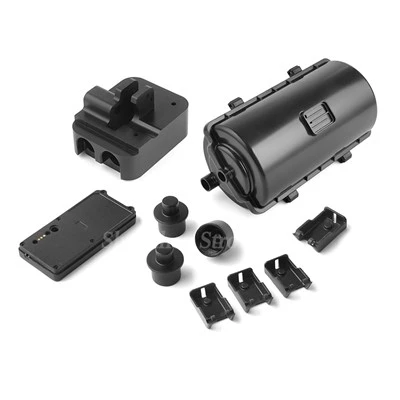


Products Description

Injection Molding Plastic Robot Case is a high-performance plastic housing solution specifically designed for various service robots, industrial robots, educational robots, and smart devices. Utilizing mature and stable injection molding technology, these products are formed in a single process using high-precision molds. This achieves high appearance consistency, stable structural strength, and efficient mass production, making them widely applicable in smart manufacturing, automated equipment, consumer-grade robotics, and scientific research fields.
In robotic products, the housing not only protects internal precision electronics and mechanical structures but also directly influences the overall aesthetic quality, brand image, and user experience. Therefore, Injection Molding Plastic Robot Case integrates structural strength, assembly tolerances, electromagnetic compatibility, thermal management requirements, and surface finish considerations during the design phase, delivering comprehensive solutions that balance functionality and aesthetics for customers.
Plastic robot enclosures produced via injection molding utilize various engineering plastics-including ABS, PC, PC+ABS, nylon, and reinforced plastics-selected based on product positioning. This approach achieves performance requirements such as lightweight construction, high impact resistance, heat resistance, and chemical corrosion resistance. Additionally, the product supports multiple surface
Advantages
1. High Consistency and Stability
The Injection Molding Plastic Robot Case is manufactured using mold injection molding, making it more suitable for medium to large-scale production compared to CNC machining or 3D printing. Each product maintains high consistency in dimensions, structure, and appearance, effectively reducing assembly errors and improving overall product yield.
01
2. Balancing Structural Strength and Lightweight Design
Through optimized rib placement, wall thickness control, and material selection, the overall weight is reduced while maintaining shell rigidity. This enhances robotic operational efficiency and energy consumption control.
02
3. High Design Flexibility
Injection molding enables the realization of complex curved surfaces, integrated structures, and concealed snap-fit designs, offering industrial designers greater creative freedom. This enhances the technological appeal and distinctiveness of robotic products.
03
4. Significant Cost Advantage
Once production volume reaches a certain scale, the unit cost of injection-molded robot cases becomes substantially lower than CNC machining or other forming methods, making it an ideal choice for mass production of robotic products.
04
5. Multiple Material and Performance Options
Injection-molded plastic robot cases offer flexible material selection based on application environments, including high-temperature resistance, flame retardancy, UV resistance, anti-aging properties, or food-grade materials to meet diverse application requirements.
05
Production Process
Requirements Analysis and Design Evaluation
During the project's initial phase, the engineering team will assess the structural feasibility of the Injection Molding Plastic Robot Case based on the client-provided 3D drawings or product concept. This evaluation encompasses wall thickness, draft angles, rib placement, assembly methods, and mold parting line solutions.
Mold Design and Manufacturing
After confirming the design proposal, the mold development phase commences. Injection molds are manufactured using high-precision CNC machining, EDM (electrical discharge machining), and other techniques to ensure mold longevity and molding accuracy, laying the foundation for subsequent stable production.
Injection Molding
Set the injection molding machine's process parameters according to the selected material specifications. Control critical parameters such as melt temperature, injection pressure, and cooling time to ensure adequate plastic flow, full mold filling, and the absence of shrinkage or deformation.
Deburring and Post-Processing
After molding, the robot casing undergoes deburring and trimming. Depending on requirements, surface treatments such as painting, screen printing, laser engraving, and UV coating are applied.
Application Scenarios


Customization Services
We offer comprehensive customization services for Injection Molding Plastic Robot Cases, including:
Structural and DFM optimization recommendations
Material selection and performance evaluation
Mold development and maintenance
Small-batch trial production and mass production support
Multiple surface treatment solutions
Custom assembly and packaging
Quality Control
Quality is paramount for the long-term stable operation of robot enclosures. We have established a comprehensive quality control system throughout the production process of Injection Molding Plastic Robot Cases:
Raw material incoming inspection
First article inspection and process patrol inspection

Dimensional inspection (2D/3D measurement)
Appearance and surface quality inspection
FAQ

Q1: Is Injection Molding Plastic Robot Case suitable for small-batch production?
Q2: Can the case be produced in multiple colors or with special effects?
Q3: Do you offer end-to-end services from design to mass production?
Hot Tags: injection molding plastic robot case, China injection molding plastic robot case manufacturers, suppliers, factory, Injection Molded Plastic Enclosure, Injection Molding Plastic Components, Injection Molding Plastic Housing, Plastic Injection Molded Parts, plastic injection molding, Plastic Product Manufacturing Injection Molding