


Products Description
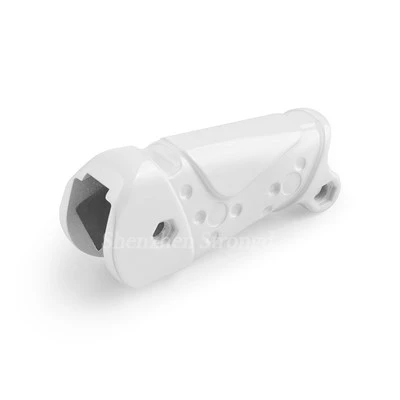
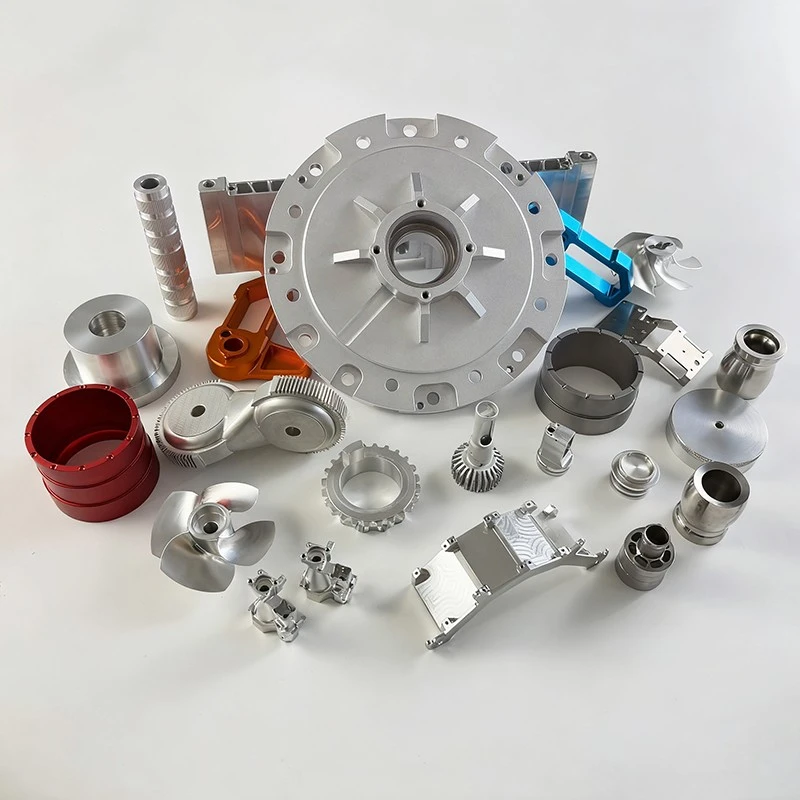
3D Printing Metal Parts SLA Aluminum Stainless Steel Primarily used for manufacturing metal components with high demands on structural complexity, dimensional accuracy, and material properties. Utilizing SLA high-precision photopolymerization technology, a high-accuracy resin master mold is first created. This is then combined with vacuum casting, metal pouring, or subsequent CNC finishing processes to ultimately produce aluminum alloy or stainless steel metal parts with stable performance and precise dimensions.
Compared to traditional metal fabrication methods, 3D-printed metal parts overcome structural limitations by enabling hollow structures, complex internal cavities, thin-walled designs, and monolithic molding, significantly expanding product design freedom. This manufacturing approach is particularly suited for R&D phases, functional validation stages, and small-to-medium batch custom production.
In product details, 3D Printing Metal Part SLA Aluminum Stainless Steel represents not merely a processing method but a comprehensive solution spanning design validation to finished product delivery. It substantially reduces trial-and-error costs and development risks for clients.

Advantages & Features
1. High Precision and Consistency
SLA technology delivers exceptional dimensional accuracy, achieving ±0.05mm or tighter tolerances, providing a reliable foundation for subsequent metal processing. It is particularly suited for precision assemblies and functional structural components.
2. Complex Structures in a Single Print
3D printing effortlessly achieves intricate surfaces, internal flow channels, honeycomb structures, and lightweight designs that are challenging with traditional CNC machining, significantly enhancing product performance.
3. Flexible Material Selection
Supports multiple metal materials, including:
Aluminum Alloy (Lightweight, High Strength)
Stainless Steel (Corrosion-Resistant, High-Temperature Tolerant)
Special Alloys (Customized per Project Requirements)
3D Printing Metal Parts SLA Aluminum Stainless Steel enables flexible material matching tailored to diverse application scenarios.
4. Short Development Cycle
No tooling required, eliminating mold costs and lead times. Ideal for new product development and rapid iteration, with design-to-sample delivery achievable in as little as days.
5. Controllable Costs
During small-batch production or prototyping phases, overall costs remain more manageable compared to traditional manufacturing methods, avoiding significant mold investment
Manufacturing Process
The complete 3D printing production process for metal parts using SLA aluminum and stainless steel typically involves the following key steps:
1. 3D Drawing Evaluation
The engineering team conducts manufacturability analysis on the customer-provided 3D models, including structural strength, wall thickness, assembly relationships, and post-processing space assessment.
2. SLA High-Precision Printing
Industrial-grade SLA equipment prints high-precision resin models, ensuring dimensional accuracy and smooth surfaces to establish a foundation for subsequent processes.
3. Post-Processing and Surface Optimization
Printed parts undergo cleaning, curing, grinding, and polishing to enhance surface quality.
4. Metal Forming Processes
Select vacuum casting, metal pouring, or CNC precision machining based on project requirements to produce aluminum alloy or stainless steel metal parts.
5. Finishing and Surface Treatment
Offer secondary CNC machining, sandblasting, anodizing, electroplating, polishing, and other surface treatments.
6. Final Inspection and Delivery
After rigorous quality control, items undergo secure packaging and scheduled delivery.
Customization Service
We provide clients with one-stop customized 3D printing services for metal parts using SLA technology with aluminum and stainless steel, covering:
- Drawing optimization and structural recommendations
- Material selection and performance analysis
- Customized surface treatment solutions
- Support for small-batch and multi-variety production
- Rapid prototyping and expedited delivery
Whether for single-piece samples or small-batch trial production, we can flexibly adjust production plans according to client requirements.
Quality Control
Quality is the key to the successful application of metal 3D printed parts. Our quality control system includes:
- Raw material quality traceability
- Printing process parameter monitoring
- Dimensional inspection (2D/3D measurement)
- Appearance and functional testing
- Pre-shipment full inspection or sampling inspection
Through multiple quality control measures, we ensure every 3D Printed Metal Part (SLA Aluminum Stainless Steel) meets customer technical requirements.

FAQ
Q1: Can SLA 3D printing directly print metal parts?
Q2: Is this method suitable for mass production?
Q3: What advantages does it offer over traditional CNC machining?
Q4: Can surface treatments be provided?
Hot Tags: 3d printing metal part sla aluminum stainless steel, China 3d printing metal part sla aluminum stainless steel manufacturers, suppliers, factory, 3D Resin Printing, Resin 3D Printing Parts, 3D Printing Plastic Parts, SLA 3D Printing Pc Parts, SLA 3D Printing ABS Resin Parts, SLA 3D Model Making