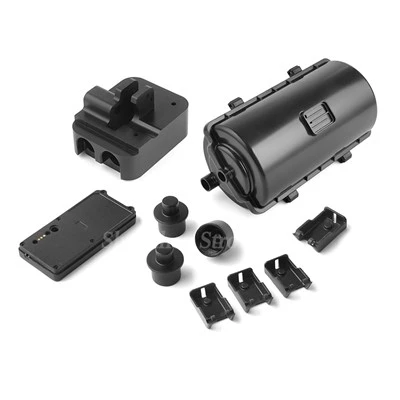


Carbon fiber automotive components are vehicle parts made with carbon fiber composite materials as the core raw material. They are produced through specialized processes such as molding, vacuum infusion, and CNC precision machining. These components cover three main categories: exterior decorative parts, interior functional parts, and core structural parts, making them an ideal choice for both automotive lightweight modifications and original high-performance configurations.
Compared to traditional metal (steel, aluminum) or plastic components, carbon fiber materials offer distinct advantages such as high strength, low density, corrosion resistance, and fatigue resistance. With a strength several times that of steel and a weight only about one-quarter that of steel for the same volume, this "lightweight yet strong" characteristic positions carbon fiber components as a core direction for innovation and upgrading in the automotive industry.
Application
Carbon fiber components, leveraging the superior properties of carbon fiber materials, are extensively used in multiple critical areas such as automotive exteriors, interiors, chassis, and powertrain systems. They are compatible with a variety of vehicle models including sports cars, luxury sedans, SUVs, and new energy vehicles:
Exterior Modification Series
This includes carbon fiber hoods, rear wings, front splitters, rear diffusers, fenders, roof racks, and more. These components not only showcase personalized style but also enhance aerodynamic performance.
01
Interior Functional Series
This includes carbon fiber center consoles, dashboard trims, steering wheels, seat frames, door panel trims, and more. The interior components feature refined surface finishing techniques, delivering clear and natural textures with a smooth touch. They not only reduce the vehicle's weight but also elevate the interior's premium feel and technological appeal.
02
Structural Functional Series
This encompasses carbon fiber drive shafts, chassis components, brake discs, intake system parts, and more. These components directly impact the vehicle's power transmission and driving safety. Through precise layer design and stringent quality control processes, we ensure our products meet the demanding requirements for high strength and stability.
03
New Energy Vehicle Specialized Series
To address the critical range challenges of new energy vehicles, we have developed components such as carbon fiber rear floor panels, battery pack enclosures, and lightweight body frames. For instance, the carbon fiber rear floor panel not only enhances torsional rigidity but also achieves significant weight reduction, directly contributing to increased driving range. We have already established partnerships with several new energy vehicle manufacturers to support the advancement of green mobility.
04
Advantages
The core competitiveness of carbon fiber composites stems from their exceptional balance of properties. Compared to traditional materials such as steel and aluminum alloys, our carbon fiber automotive components offer four irreplaceable advantages:
Lightweight and High Strength for Enhanced Performance
Carbon fiber has a specific strength (strength-to-density ratio) 5–6 times greater than that of high-strength steel, with a density of approximately 1.6 g/cm³-less than one-fourth that of steel (7.8 g/cm³) and over 40% lighter than aluminum alloy (2.7 g/cm³). Its superior structural integrity ensures that components remain intact under severe impacts and high-frequency vibrations. For instance, carbon fiber drive shafts exhibit significantly higher torsional stiffness than their metal counterparts, providing greater stability and reliability in power transmission.
Weather Resistance and Durability, Reducing Maintenance Costs
Carbon fiber exhibits excellent chemical stability and fatigue resistance, eliminating the need for frequent anti-corrosion coatings required for metal components and avoiding common electrochemical corrosion issues associated with aluminum alloys. In areas prone to exposure to rainwater, oil, and contaminants-such as chassis and exhaust systems-carbon fiber components maintain stable performance over extended periods. Their fatigue life under cyclic loading is 3 to 5 times greater than that of steel, significantly extending service life and reducing long-term maintenance costs.
Design Freedom for Personalized Aesthetics
The molding process of carbon fiber offers far greater design flexibility compared to metals, enabling complex curved surfaces and integrated structural designs that reduce connection points by over 80%, simultaneously cutting weight and enhancing overall rigidity. By optimizing the orientation of carbon fiber layups, we can tailor the mechanical properties of components. Additionally, we offer a wide range of surface texture options, including 3K twill weave, plain weave, forged patterns, and honeycomb patterns. These can be paired with high-gloss clear coatings or customized color finishes to create visually striking appearances. Interior components such as carbon fiber dashboards and trim pieces not only reduce in-cabin weight but also elevate the driving environment with a blend of technological sophistication and premium aesthetics.
Eco-Friendly and Energy-Saving, Aligning with Sustainability Trends
The lightweight nature of carbon fiber components directly reduces vehicle energy consumption and CO₂ emissions, aligning with the global automotive industry's shift toward low-carbon development. Furthermore, we utilize environmentally friendly epoxy resins and high-performance prepreg materials in production, adhering strictly to ISO 9001 quality management standards to minimize harmful emissions. Certain materials can also be recycled and reused, reflecting our commitment to green manufacturing while enhancing performance.Custom Service
The plastic injection molding is suitable for mass production requirement, as the sample is confirmed, the following parts can be repeated smoothly.
Design and Data Modeling
Based on 2D/3D drawings provided by customers (supporting formats such as STEP, IGES, STL, and DWG) or original vehicle components, our engineering team uses 3D scanning to obtain precise data. Combining stress analysis and aerodynamic requirements, product modeling is completed in CAD software. Carbon fiber layup orientation, thickness, and molding process parameters are defined to ensure the design balances performance with installation accuracy.
High-Precision Mold Manufacturing
Molds are the foundation of product precision. We use CNC machining centers to mill solid blocks of aluminum or steel, achieving mold precision within ±0.05 mm. This ensures the final product fits perfectly with the vehicle body. The mold surface undergoes specialized treatment to guarantee clear replication of carbon fiber texture and smooth demolding.
Layup and Curing Molding
High-performance carbon fiber prepregs ranging from T300 to T1100 grade are selected for manual layup according to the design plan. Unidirectional fabrics are applied in critical stress areas to enhance strength, while twill fabrics are used on visible surfaces to ensure aesthetic appeal. Each layer is compacted with professional tools to eliminate air and prevent voids. The mold and prepreg are then sealed in a vacuum bag and placed into an autoclave for curing at 120–180°C, allowing the resin and carbon fiber to fully integrate and form a robust composite structure.
Post-Processing Refinement
After demolding, the rough components undergo three key finishing steps: trimming, polishing, and coating. Trimming is performed using CNC machines or specialized tools to remove excess edges, with dimensional tolerances controlled within ±0.2 mm. Polishing starts with 120-grit coarse sandpaper and progresses to 1000-grit fine sandpaper to eliminate burrs and seams. Finally, 2-3 layers of high-gloss clear coat are sprayed and cured at low-temperature baking. This not only protects the carbon fiber texture but also enhances surface quality and scratch resistance.
Triple Quality Inspection
All products must pass three rigorous inspection stages: visual inspection, dimensional measurement, and non-destructive testing. Visual inspection identifies surface defects such as bubbles and cracks. Coordinate measuring machines verify the precision of critical dimensions and installation holes. High-performance components undergo additional ultrasonic flaw detection to detect internal hidden defects like delamination or voids, ensuring every product meets stringent quality standards.
Delivery
Global logistics support (DHL/FedEx/UPS)
FAQ
Hot Tags: custom carbon fiber automotive components molding, China custom carbon fiber automotive components molding manufacturers, suppliers, factory, Injection Molding ABS, Injection Molding Plastic Components, Injection Molding Plastic Housing, Plastic Injection Molded Parts, plastic injection molding, Plastic Product Manufacturing Injection Molding