


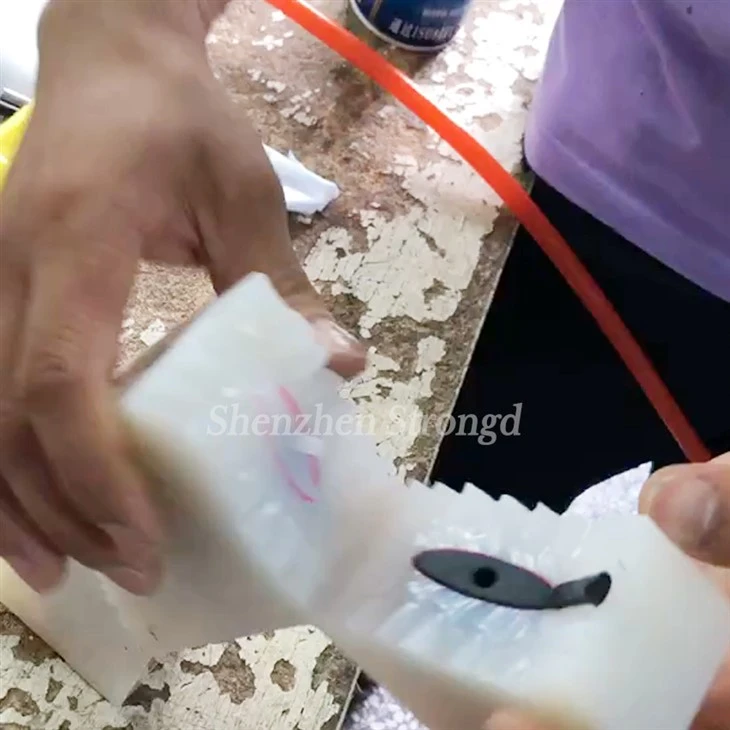


Vacuum casting components refer to producing high-fidelity prototypes and low-volume parts using silicone molds and polyurethane resins. Strongd serves automotive, consumer electronics, and medical industries, creating functional prototypes, housings, grips, and aesthetic models. Ideal for 5–500 units, we bridge prototyping to injection molding.
Advantages
Rapid Turnaround & Low Cost
Lead time: 2–5 days for first samples
Cost: 1/5 of injection molding for <50 pcs
Mold lifespan: 15–25 casts per mold
Material Versatility
Simulate production plastics with 100+ resins:
ABS-like: Tensile strength 40–60 MPa
PP-like: Flexibility with 200% elongation
Specialty: Optical-clear, fire-rated (UL 94 V0), or silicone-like
High Detail Reproduction
Resolution: ±0.15mm tolerances
Surface finish: Mirror polish or textured (VDI 3400)
Undercuts: No ejection issues vs. rigid molds
Applications
Pre-production validation of form, fit, and function:
Automotive
Dashboard bezels, light guides, button panels
Medical
Ergonomics testing for handheld devices
Consumer
Wearable device housings, snap-fit assemblies
Aerospace
Ducting prototypes (heat-resistant resins)
Surface Treatment
Enhanced realism and performance:
Painting
Automotive-grade color matches (Pantone)
Metal plating
Vacuum metallization for chrome finishes
Laser etching
Labels/faux textures
Soft-touch coating
TPE-like grips (Shore A 40–80)
Why Choose Strongd?
Our ISO 9001-certified team combines 10+ years of vacuum casting expertise with in-house mold making and finishing. We optimize designs for castability, provide material selection guidance, and deliver 98% dimensionally accurate parts. 80% clients use us for bridge production.
Production Process
Master Pattern Preparation
CNC/3D printed master (accuracy: ±0.05mm)
Apply surface finish to master
Silicone Mold Making
Vacuum-degassed silicone (Shore A 25)
Cure time: 4–8 hours at 40°C
Resin Casting
Degas resin under 0.1 bar vacuum
Inject into mold (manual/automated)
Curing
Oven cure: 60–80°C for 1–4 hours
Demolding & Trimming
Remove parting line flash
Gate removal
Post-Processing
Sanding/polishing
Apply secondary finishes
Inspection
CMM check against master
Functional testing (snap-fits, seals)
FAQ
Hot Tags: vacuum casting components, China vacuum casting components manufacturers, suppliers, factory, Silicone Mold Plastic Casting, Vacuum Casting ABS Shell, vacuum casting plastic parts, Vacuum Casting Plastic Case, Vacuum Casting PC Parts, Vacuum Casting Plastic Electronic Shell


