

1, Strong Alliance: When 'Design Freedom' Meets' Precision and Reliability '
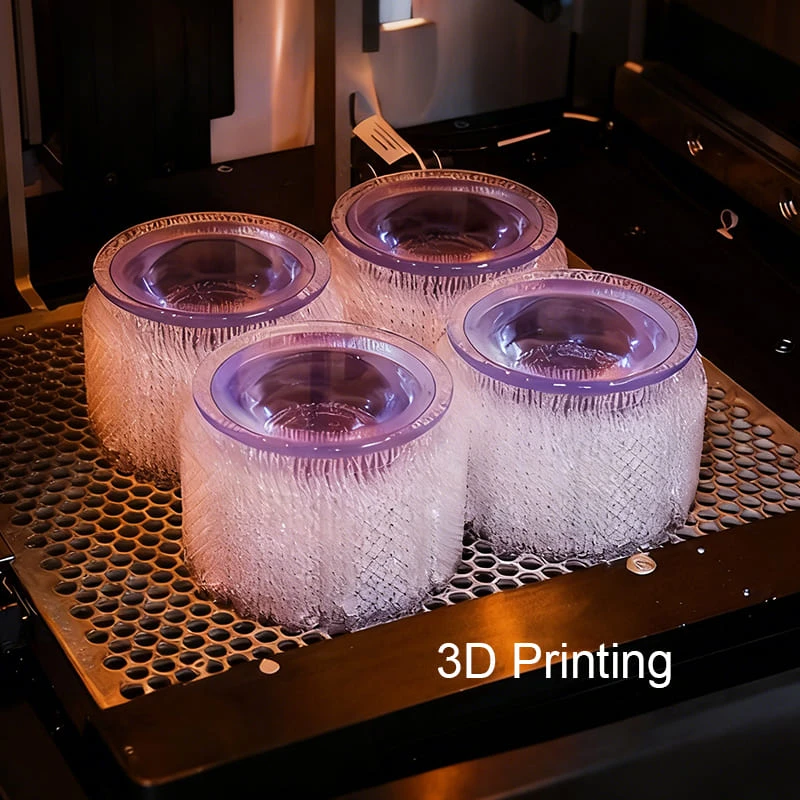
The core advantage of 3D printing (additive manufacturing) lies in its ability to stack from scratch. It can easily achieve complex internal flow channels, lattice structures, and integrated lightweight design that traditional processing cannot reach, almost without geometric shape limitations, greatly unleashing design innovation.
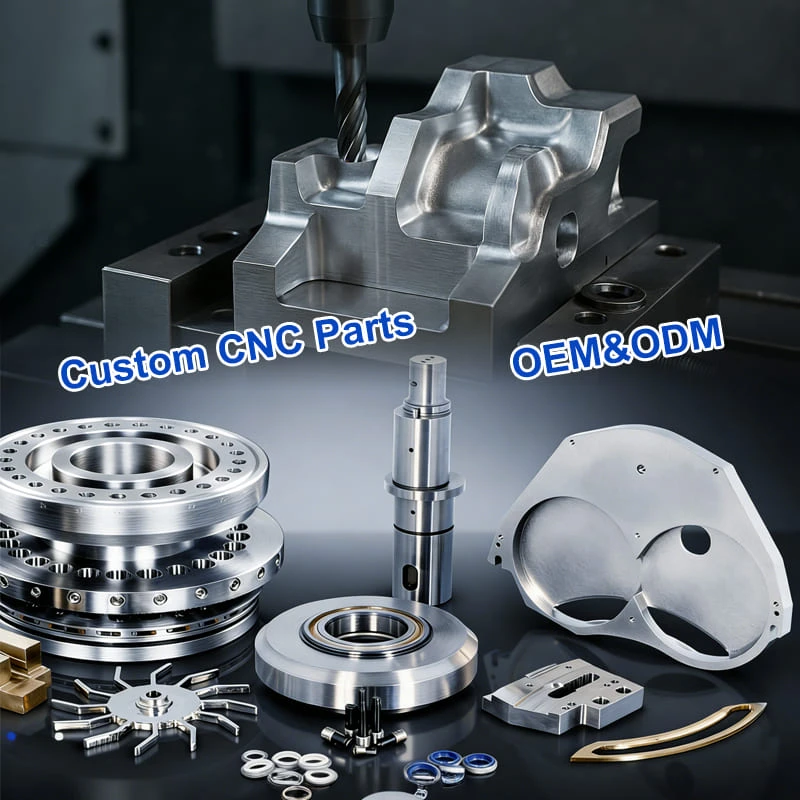
CNC machining (subtractive manufacturing) represents the ultimate control of "from quality to precision". It has mature and irreplaceable advantages in dimensional tolerance, surface smoothness, processing of high-strength materials (such as block metals), and treatment of functional contact surfaces.
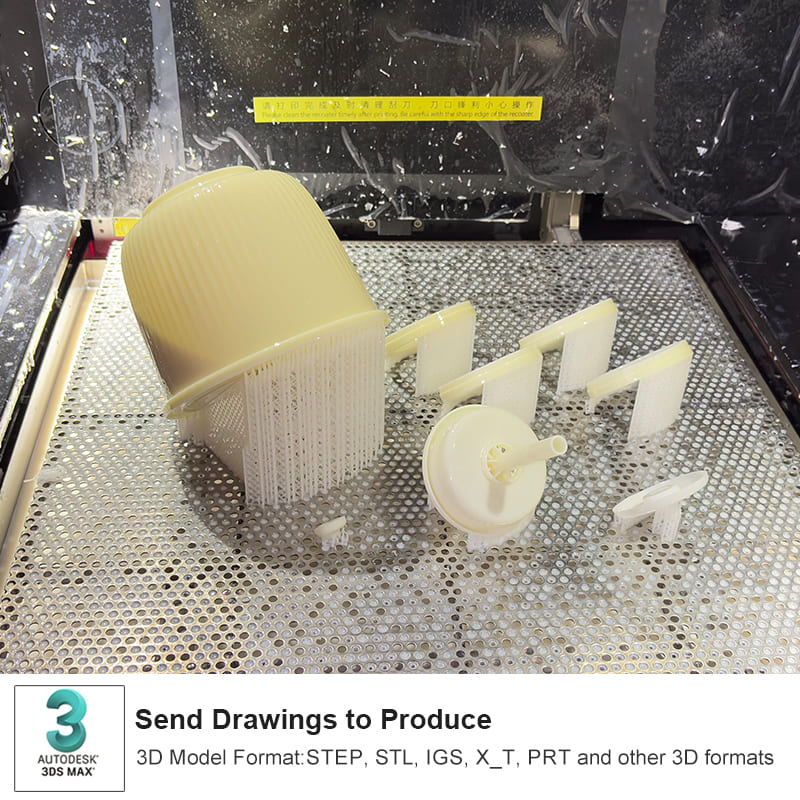
The essence of hybrid manufacturing is to serialize and integrate the two in the manufacturing process of the same part: first, use 3D printing to construct complex bodies or near net shaped blanks, and then use CNC machining to finely refine key parts such as installation interfaces, sealing surfaces, and high-precision hole positions. This is like molding vivid forms of art with clay first, and then carving vivid details with a carving knife.
2, Addressing the 'impossible triangle' in traditional manufacturing
In many high-end industries, parts often face the challenge of an impossible triangle of complexity, precision, and material performance. Hybrid manufacturing provides a breakthrough:
Aerospace and military industry: The turbine blades are filled with complex and irregular air film holes for cooling, which is extremely difficult to use in traditional processes. Now, the blade body can be formed by 3D printing, and then the air film hole and blade root tenon can be machined using ultra precision five axis CNC to ensure its aerodynamic efficiency and structural reliability.
High end medical devices, such as implants or surgical guides, require a perfect fit to the complex biological surfaces of human bones, while the parts connected to screws require extremely high mechanical strength and precision. Hybrid manufacturing can first use 3D printing to customize and generate perfect surfaces, and then use CNC precision machining to create sturdy threaded holes.
Automobiles and molds: The conformal cooling water circuit is the key to improving the efficiency of injection molds. Hybrid manufacturing allows for 3D printing of cooling water channels inside the mold core, forming the most ideal cooling path, and then CNC precision machining to produce the molding and parting surfaces of the mold, balancing efficiency and lifespan.
3, The Practical Path and Value Advantages of Hybrid Manufacturing
In practice, hybrid manufacturing mainly manifests in two modes:
Process mixing: This is currently the most mainstream application. After completing additive manufacturing on 3D printing equipment, the parts are transferred to CNC machine tools for subtractive precision machining. This requires manufacturers to possess both mature process capabilities and precise positioning technology across processes.
Equipment mixing: More advanced "integrated hybrid manufacturing machine tools" are emerging. It integrates additive printing heads and subtractive cutting heads into the same device, and through software intelligent control, performs local milling, turning, or drilling immediately during or after printing, truly achieving "one-step molding, instant finishing".
The core value it brings is disruptive:
Shorten delivery time: Reduce the frequency of multiple supplier turnover and clamping.
Cost reduction and efficiency improvement: significantly reducing cutting waste of expensive metal materials and optimizing the process chain.
Performance breakthrough: Manufacturing high-performance integrated parts that were previously impossible to process as a whole
4, Outlook: Hybrid manufacturing is an inevitable extension of intelligent manufacturing
Hybrid manufacturing is not only a combination of technologies, but also a crucial step towards flexible, digital, and intelligent production. It heavily relies on CAD/CAM integrated design, simulation optimization, and intelligent production management software. With the application of artificial intelligence in process path planning, future systems will be able to automatically analyze part models and make intelligent decisions on "where to print and where to cut" to achieve the optimal balance between quality, cost, and efficiency.
StrongD CNC is closely tracking this manufacturing trend. With our profound expertise in precision CNC machining and rapid prototyping manufacturing, we are able to provide customers with professional solution consulting and trial production services based on hybrid manufacturing thinking. We believe that manufacturers who can handle this fusion technology will become the most trusted partners for customers when facing the most complex design challenges.
The future has arrived. It is not a substitution of additive manufacturing for subtractive manufacturing, but a collaboration between the two to jointly explore a new frontier in precision manufacturing.


