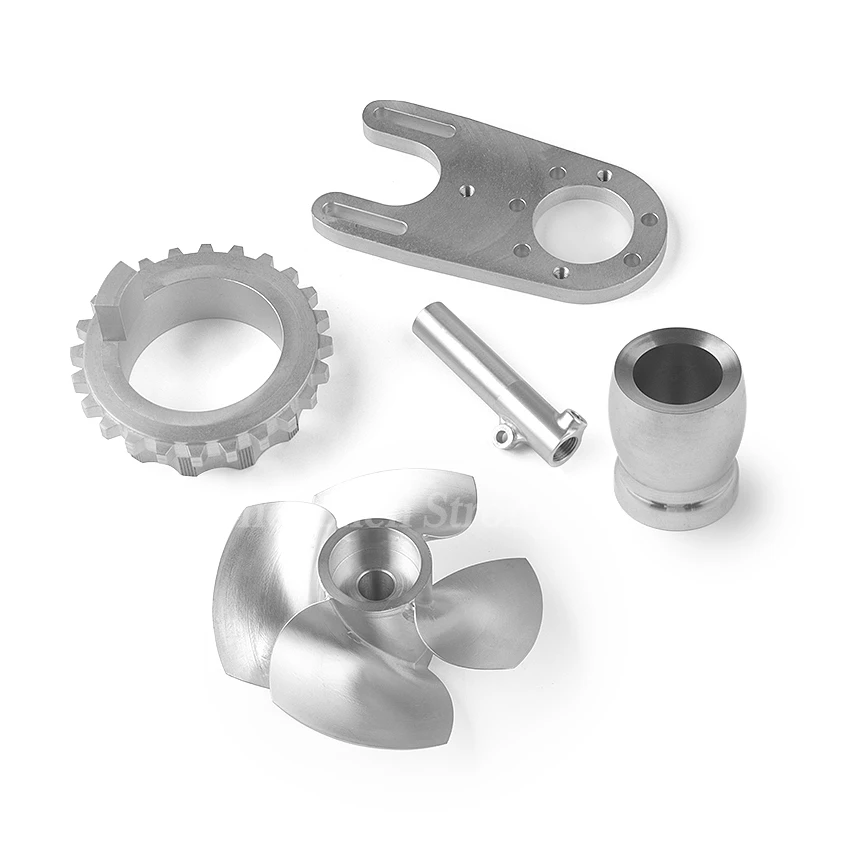

In recent years, 3D printing technology has emerged as a revolutionary force across various industries, offering unprecedented flexibility, speed, and cost - effectiveness in manufacturing. As a supplier of 3D Printing Model Parts, I've witnessed firsthand the transformative impact of this technology. One question that often arises is whether 3D printed model parts can be used in the telecommunications industry. In this blog, we'll explore the potential of 3D printed parts in telecommunications, examining their advantages, limitations, and real - world applications.
Advantages of 3D Printed Model Parts in Telecommunications
Design Flexibility
One of the most significant advantages of 3D printing is its ability to create highly complex and customized designs. In the telecommunications industry, where devices are becoming increasingly miniaturized and sophisticated, the need for unique and intricate parts is ever - growing. With 3D printing, it's possible to produce parts with complex geometries that would be difficult or impossible to manufacture using traditional methods. For example, antenna designs can be optimized for specific frequencies and signal patterns. The SLA 3D Model Making process allows for the creation of high - resolution models with fine details, enabling telecommunications engineers to prototype and test new antenna designs quickly.
Rapid Prototyping
Time - to - market is a critical factor in the telecommunications industry. 3D printing enables rapid prototyping, allowing companies to quickly iterate on new designs and bring products to market faster. Instead of waiting weeks or months for tooling to be created for traditional manufacturing methods, 3D printed parts can be produced in a matter of hours or days. This speed of prototyping not only shortens the development cycle but also reduces costs associated with design changes. For instance, a telecommunications company can use 3D printed parts to test the form and fit of a new smartphone case before committing to mass production.
Cost - Effectiveness for Small - Batch Production
For small - batch production runs, 3D printing can be more cost - effective than traditional manufacturing methods. In the telecommunications industry, there are often requirements for limited quantities of specialized parts, such as custom enclosures for specific network equipment. Traditional manufacturing methods like injection molding require expensive tooling, which can make small - batch production uneconomical. In contrast, 3D printing eliminates the need for tooling, making it a more viable option for producing small quantities of parts. The 3D Resin Printing technology offers a cost - effective solution for small - scale production of high - quality parts.
On - Demand Manufacturing
Telecommunications companies often face unpredictable demand for parts, especially for legacy equipment or custom - built systems. 3D printing enables on - demand manufacturing, meaning that parts can be produced as needed, reducing inventory costs and the risk of obsolete stock. For example, if a particular network component fails and a replacement part is required, a 3D printed replacement can be produced quickly, minimizing downtime.
Limitations of 3D Printed Model Parts in Telecommunications
Material Properties
While 3D printing materials have improved significantly in recent years, they may still not meet the exacting standards of some telecommunications applications. For example, some high - frequency applications require materials with very low dielectric loss, high thermal conductivity, and excellent mechanical strength. Although there are 3D printing materials available with good electrical properties, they may not match the performance of traditional materials in all respects. However, ongoing research and development in 3D printing materials are continuously expanding the range of available options.
Production Speed for Large - Scale Manufacturing
For large - scale production, the speed of 3D printing can be a limitation. Traditional manufacturing methods like injection molding can produce parts at a much higher volume per unit time. In the telecommunications industry, where there is often a need for mass - producing components such as SIM cards or connectors, 3D printing may not be the most efficient option. However, for low - volume, high - complexity parts, 3D printing's advantages often outweigh this limitation.
Surface Finish and Tolerance
The surface finish and dimensional tolerance of 3D printed parts may not be as precise as those produced by traditional manufacturing methods. In telecommunications, where parts need to fit together precisely and have smooth surfaces for proper electrical contact, this can be a concern. However, post - processing techniques such as sanding, polishing, and coating can be used to improve the surface finish and tolerance of 3D printed parts.
Real - World Applications of 3D Printed Model Parts in Telecommunications
Antenna Manufacturing
Antennas are a critical component of telecommunications systems, and 3D printing offers unique opportunities for antenna design and manufacturing. Using 3D printing, it's possible to create antennas with complex shapes and structures that can improve performance and reduce size. For example, 3D printed antennas can be customized for specific frequency bands, enabling better signal reception and transmission. The Resin 3D Printing Parts can be used to produce high - precision antenna components with excellent electrical properties.
Enclosures and Housings
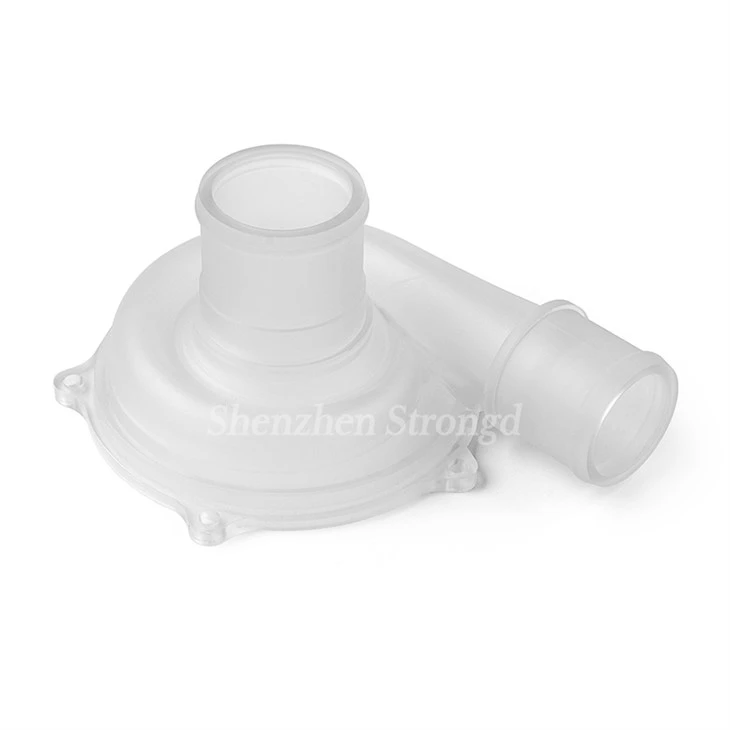
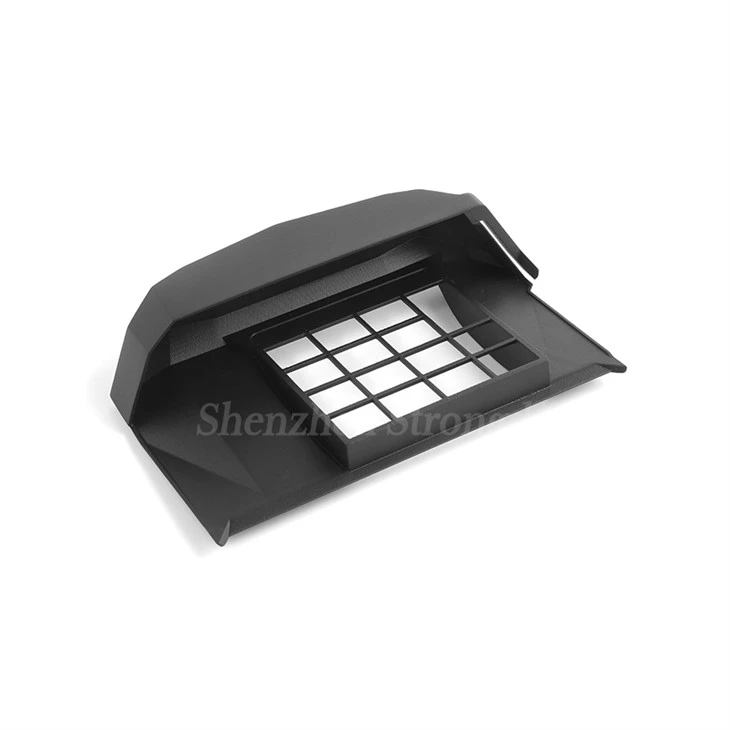
Telecommunications equipment often requires enclosures and housings to protect the internal components from environmental factors and electromagnetic interference. 3D printing allows for the creation of custom enclosures that can be optimized for specific equipment. For example, a 3D printed enclosure can be designed to have built - in cooling channels, which can improve the thermal management of the equipment. Additionally, 3D printed enclosures can be quickly modified to accommodate design changes or new equipment requirements.
Custom Connectors and Adapters
In the telecommunications industry, there is a need for custom connectors and adapters to interface different types of equipment. 3D printing can produce these custom parts with high precision, ensuring a proper fit and electrical connection. This is particularly useful for legacy systems or specialized applications where off - the - shelf connectors may not be available.
Conclusion
In conclusion, 3D printed model parts have significant potential in the telecommunications industry. While there are limitations in terms of material properties, production speed for large - scale manufacturing, and surface finish, the advantages of design flexibility, rapid prototyping, cost - effectiveness for small - batch production, and on - demand manufacturing make 3D printing a compelling option for many telecommunications applications.
As a supplier of 3D Printing Model Parts, we are committed to providing high - quality parts that meet the specific needs of the telecommunications industry. Our expertise in SLA 3D Model Making, 3D Resin Printing, and Resin 3D Printing Parts allows us to offer customized solutions for our clients.
If you are a telecommunications company looking to explore the use of 3D printed model parts in your products or operations, we invite you to contact us for a consultation. We can discuss your specific requirements, provide samples of our work, and help you determine the best 3D printing solutions for your needs.
References
- Gibson, I., Rosen, D. W., & Stucker, B. (2010). Additive Manufacturing Technologies: Rapid Prototyping to Direct Digital Manufacturing. Springer.
- Wohlers, T., & Gornet, P. (2020). Wohlers Report 2020: 3D Printing and Additive Manufacturing State of the Industry. Wohlers Associates.
- Lee, S., & Park, S. (2019). 3D Printing in the Electronics Industry: Current Status and Future Prospects. Journal of Manufacturing Processes, 43, 40 - 51.