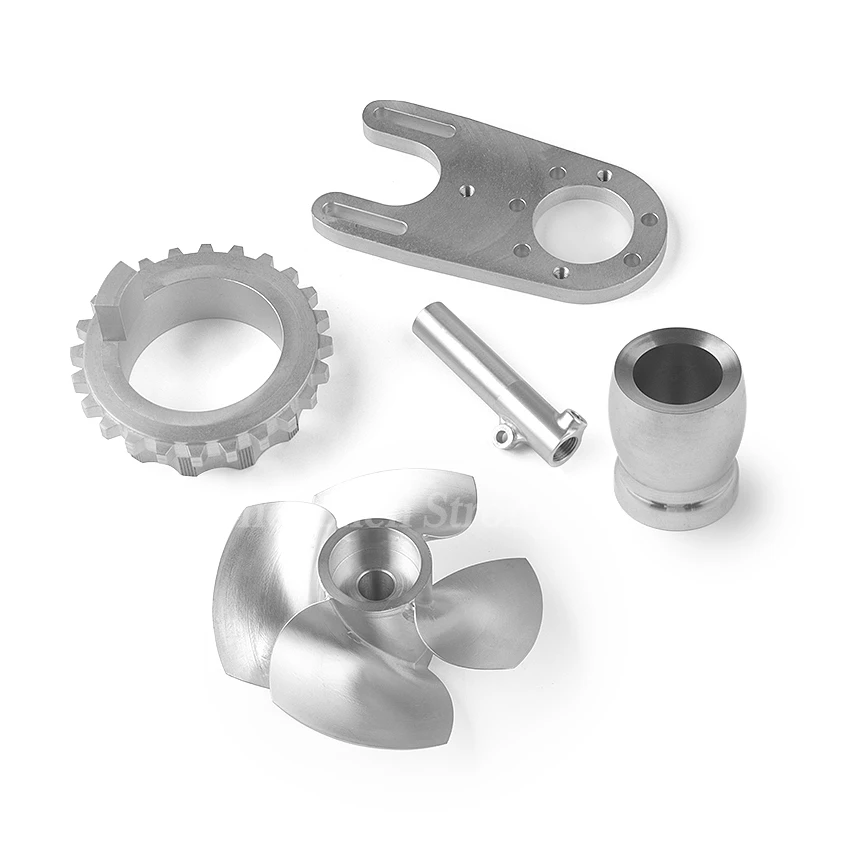

Hey there! As a supplier of Metal Robot Body Parts, I've been getting a lot of questions lately about the heat - dissipation properties of these parts. So, I thought I'd sit down and write this blog to share some insights.
First off, let's talk about why heat dissipation in metal robot body parts is such a big deal. Robots are like little powerhouses. They've got motors, circuits, and all sorts of components that generate heat when they're running. If that heat isn't dissipated properly, it can cause a whole bunch of problems. For example, overheating can reduce the efficiency of the robot's electronic components, shorten their lifespan, and even lead to system failures. That's why having good heat - dissipation properties in the metal body parts is crucial.
Now, let's look at some of the common metals used for robot body parts and their heat - dissipation capabilities.
Aluminum is one of the most popular choices. It's lightweight, which is great for robots as it helps to reduce the overall weight and increase mobility. But more importantly, aluminum has excellent thermal conductivity. Thermal conductivity is a measure of how well a material can transfer heat. The higher the thermal conductivity, the better the material is at dissipating heat. Aluminum has a thermal conductivity of around 205 W/(m·K). This means that it can quickly transfer heat away from the hot components inside the robot to the surrounding environment. You can check out our Aluminium Robot Chassis for more details on how we use aluminum in our products.
Copper is another metal with outstanding heat - dissipation properties. It has an even higher thermal conductivity than aluminum, around 401 W/(m·K). Copper can transfer heat very efficiently, making it ideal for applications where high - power components generate a large amount of heat. However, copper is heavier and more expensive than aluminum. So, it's often used in combination with other metals or in specific areas of the robot where maximum heat dissipation is required.
Steel is also used in robot body parts, especially when strength and durability are the main concerns. While steel doesn't have the same level of thermal conductivity as aluminum or copper (its thermal conductivity is around 45 W/(m·K)), it still plays an important role in heat dissipation. Steel parts can act as heat sinks, absorbing and spreading heat over a larger area. This helps to prevent local overheating and protect the sensitive electronic components.
The design of the metal robot body parts also plays a significant role in heat dissipation. For example, fins can be added to the surface of the parts. Fins increase the surface area of the metal, allowing more heat to be transferred to the surrounding air. The shape and size of the fins can be optimized to maximize heat dissipation. Additionally, proper ventilation channels can be designed into the body parts. These channels allow air to flow through the robot, carrying away the heat.
We also use advanced manufacturing techniques to enhance the heat - dissipation properties of our Metal Robot Body Parts. CNC Machining Of ABS Plastic Robot Parts: Driving Robot Evolution Through Precision Manufacturing is a process that we sometimes combine with metal parts manufacturing. Although it's about ABS plastic parts, the precision aspect can also be applied to metal parts. CNC machining allows us to create complex shapes and structures with high accuracy, which can improve the heat - dissipation efficiency of the metal parts.


When it comes to our Metal Robot Body Parts, we conduct rigorous testing to ensure their heat - dissipation performance. We use thermal imaging cameras to measure the temperature distribution on the surface of the parts under different operating conditions. This allows us to identify any areas where heat is accumulating and make necessary adjustments to the design or material.
In addition to the material and design, the environment in which the robot operates also affects heat dissipation. If the robot is working in a hot and humid environment, it will be more challenging to dissipate heat. In such cases, we may need to recommend additional cooling solutions, such as fans or liquid cooling systems.
So, if you're in the market for high - quality Metal Robot Body Parts with excellent heat - dissipation properties, look no further. We've got the expertise, the materials, and the manufacturing capabilities to provide you with the best products. Whether you're building a small domestic robot or a large industrial one, we can tailor our parts to meet your specific needs.
If you're interested in discussing your requirements or have any questions about our Metal Robot Body Parts, don't hesitate to reach out. We're always happy to have a chat and work together to find the perfect solution for your robot project.
References
- Incropera, F. P., DeWitt, D. P., Bergman, T. L., & Lavine, A. S. (2007). Fundamentals of Heat and Mass Transfer. Wiley.
- Holman, J. P. (2010). Heat Transfer. McGraw - Hill.