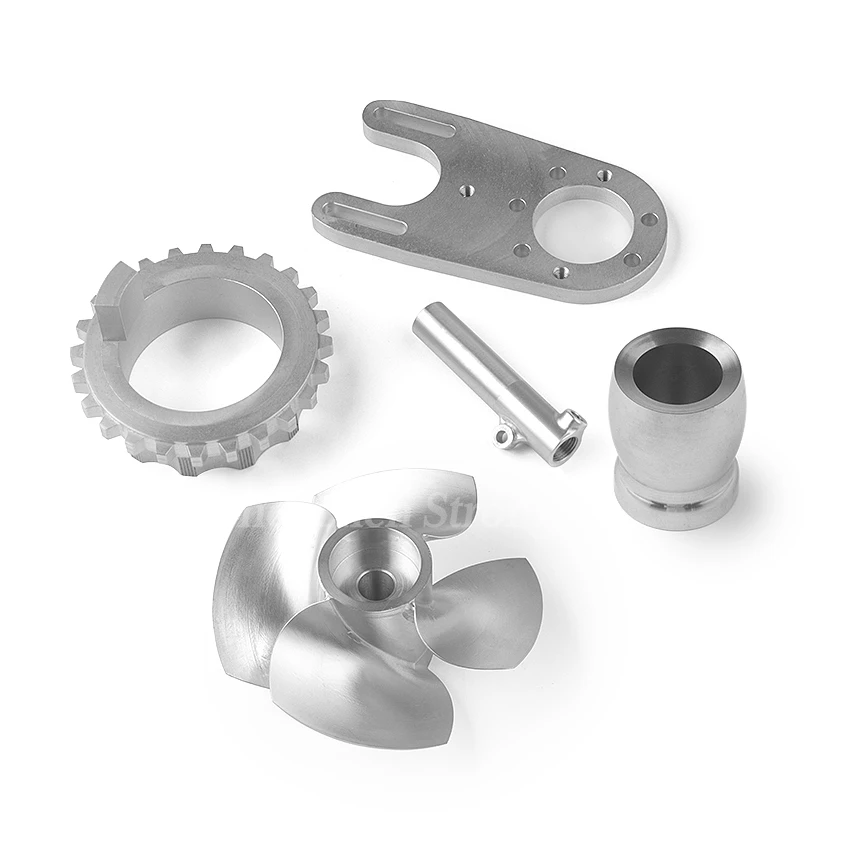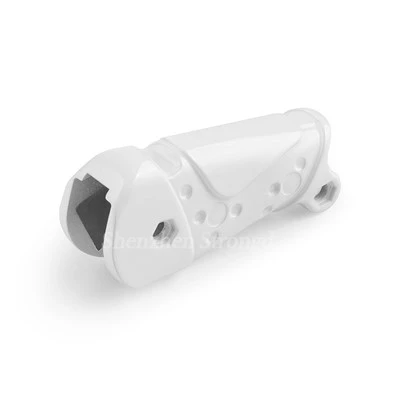

Selective Laser Sintering (SLS) 3D printing has emerged as a revolutionary technology in the manufacturing industry, offering unparalleled flexibility, precision, and efficiency. As a leading provider of SLS 3D printing services, we have witnessed firsthand the transformative potential of this technology across various sectors. One area that has particularly piqued our interest is the medical field, where SLS 3D printing holds the promise of revolutionizing patient care, treatment, and research. In this blog post, we will explore the feasibility and applications of SLS 3D printing in the medical industry.
Understanding SLS 3D Printing
Before delving into its medical applications, it's essential to understand how SLS 3D printing works. SLS is an additive manufacturing process that uses a high-powered laser to selectively fuse powdered material, layer by layer, to create a three-dimensional object. The powdered materials commonly used in SLS 3D printing include nylon, polyamide (PA), and other polymers, which offer excellent mechanical properties, durability, and biocompatibility.


The SLS 3D printing process begins with the creation of a digital 3D model using computer-aided design (CAD) software. The model is then sliced into thin layers, and the printer uses the laser to sinter the powdered material according to the specifications of each layer. This layer-by-layer approach allows for the creation of complex geometries and intricate details that are difficult or impossible to achieve using traditional manufacturing methods.
Advantages of SLS 3D Printing for Medical Applications
SLS 3D printing offers several advantages that make it well-suited for medical applications. These advantages include:
- Customization: One of the most significant benefits of SLS 3D printing is its ability to produce customized medical devices and implants tailored to the specific needs of individual patients. By using patient-specific imaging data, such as CT scans or MRI images, doctors can design and print personalized implants, prosthetics, and surgical guides that fit perfectly and enhance patient outcomes.
- Complex Geometries: SLS 3D printing allows for the creation of complex geometries and internal structures that are difficult or impossible to achieve using traditional manufacturing methods. This capability is particularly useful in the medical field, where complex anatomical shapes and porous structures are often required for implants, scaffolds, and tissue engineering applications.
- Biocompatibility: Many of the materials used in SLS 3D printing, such as nylon and PA, are biocompatible, meaning they are non-toxic and do not cause an immune response when implanted in the body. This property makes SLS 3D printing an ideal choice for manufacturing medical devices and implants that come into contact with living tissue.
- Rapid Prototyping: SLS 3D printing enables rapid prototyping, allowing medical device manufacturers and researchers to quickly iterate and test new designs. This speed and flexibility can significantly reduce the time and cost associated with product development and bring new medical technologies to market faster.
- Cost-Effectiveness: In some cases, SLS 3D printing can be more cost-effective than traditional manufacturing methods, especially for small batch production or customized products. By eliminating the need for expensive tooling and molds, SLS 3D printing can reduce production costs and make medical devices more accessible to patients.
Medical Applications of SLS 3D Printing
SLS 3D printing has a wide range of potential applications in the medical field, including:
- Prosthetics and Orthotics: SLS 3D printing can be used to manufacture customized prosthetics and orthotics that fit perfectly and provide better comfort and functionality than traditional devices. By using patient-specific data, doctors can design and print prosthetic limbs, braces, and splints that are tailored to the individual's anatomy and movement patterns.
- Surgical Guides and Templates: SLS 3D printing can be used to create surgical guides and templates that assist surgeons during complex procedures. These guides can be customized based on the patient's anatomy and the specific requirements of the surgery, helping to improve the accuracy and precision of the procedure and reduce the risk of complications.
- Implants and Biomaterials: SLS 3D printing can be used to manufacture a variety of implants, including dental implants, bone plates, and joint replacements. By using biocompatible materials and creating porous structures, SLS 3D printing can improve the integration of implants with the surrounding tissue and reduce the risk of rejection.
- Tissue Engineering and Regenerative Medicine: SLS 3D printing can be used to create scaffolds and matrices for tissue engineering and regenerative medicine applications. These scaffolds can provide a three-dimensional structure for cells to grow and differentiate, helping to repair and regenerate damaged tissues and organs.
- Medical Models and Anatomical Replicas: SLS 3D printing can be used to create accurate medical models and anatomical replicas for educational and training purposes. These models can help medical students and professionals better understand the human anatomy and practice surgical procedures in a realistic and safe environment.
Challenges and Limitations
While SLS 3D printing offers many advantages for medical applications, there are also some challenges and limitations that need to be addressed. These include:
- Material Selection: Not all materials used in SLS 3D printing are suitable for medical applications. It is essential to select materials that are biocompatible, sterilizable, and meet the specific requirements of the intended application.
- Regulatory Compliance: Medical devices and implants are subject to strict regulatory requirements, and it is essential to ensure that SLS 3D printed products comply with all relevant regulations and standards.
- Quality Control: Ensuring the quality and consistency of SLS 3D printed products is crucial, especially in the medical field. It is necessary to implement rigorous quality control measures throughout the printing process to ensure that the products meet the required specifications and standards.
- Cost: While SLS 3D printing can be cost-effective for some applications, it may still be more expensive than traditional manufacturing methods for large-scale production. It is essential to carefully evaluate the cost-benefit ratio of SLS 3D printing for each specific application.
Conclusion
In conclusion, SLS 3D printing has the potential to revolutionize the medical field by enabling the production of customized medical devices, implants, and models that are tailored to the specific needs of individual patients. The technology offers several advantages, including customization, complex geometries, biocompatibility, rapid prototyping, and cost-effectiveness. However, there are also some challenges and limitations that need to be addressed, such as material selection, regulatory compliance, quality control, and cost.
As a leading provider of SLS 3D Printing Nylon Parts and SLS 3D Printing PA Parts, we are committed to working with medical professionals, researchers, and manufacturers to overcome these challenges and unlock the full potential of SLS 3D printing in the medical field. Our state-of-the-art SLS 3D printing facilities, experienced team of engineers and technicians, and commitment to quality and innovation make us the ideal partner for your medical 3D printing needs.
If you are interested in learning more about our SLS 3D printing services for medical applications or would like to discuss a specific project, please do not hesitate to contact us. We would be happy to provide you with more information and answer any questions you may have.
References
- Gibson, I., Rosen, D. W., & Stucker, B. (2014). Additive manufacturing technologies: 3D printing, rapid prototyping, and direct digital manufacturing. Springer.
- Hopkinson, N., Hague, R., & Dickens, P. (2006). Rapid manufacturing: an industrial revolution for the digital age. Wiley.
- Wohlers, T., & Gornet, P. (2018). Wohlers report 2018: 3D printing and additive manufacturing state of the industry. Wohlers Associates.