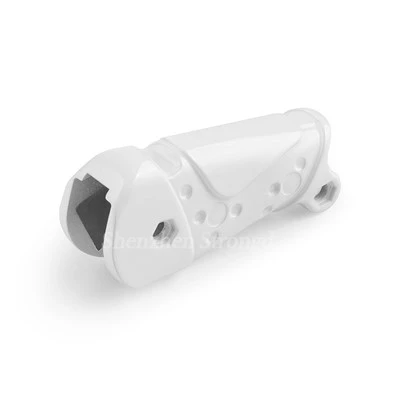

As a provider of SLS 3D printing services, I often encounter inquiries from clients about the possibility of using food - grade materials in our SLS 3D printing process. This is a topic that combines both the innovation of 3D printing technology and the strict requirements of food safety, which makes it highly worthy of in - depth exploration.
Understanding SLS 3D Printing
Selective Laser Sintering (SLS) is a powerful 3D printing technology. It uses a high - power laser to selectively fuse small particles of powder material layer by layer, based on a digital 3D model. This process allows for the creation of complex geometries that are difficult or impossible to achieve with traditional manufacturing methods. The advantages of SLS 3D printing include high precision, good mechanical properties of the printed parts, and the ability to produce parts without the need for support structures in most cases.
SLS 3D printing has been widely used in various industries, such as automotive, aerospace, and consumer products. For example, in the automotive industry, SLS 3D printing can be used to create custom - made parts for prototypes or low - volume production. In the aerospace industry, it can produce lightweight and high - strength components.
Common Materials in SLS 3D Printing
The most commonly used materials in SLS 3D printing are plastics, especially nylon - based materials. Nylon SLS Printing offers excellent mechanical properties, such as high tensile strength and good impact resistance. Nylon parts printed by SLS are also known for their good chemical resistance and low friction coefficient.
Another popular material is polyamide (PA). SLS 3D Printing PA Parts have similar characteristics to nylon parts. PA materials can be formulated to have different properties, such as flexibility or stiffness, depending on the specific application requirements.
In addition to plastics, metal materials are also used in a related process called Selective Laser Melting (SLM). SLM 3D Printing Stainless Steel Model is a process where a laser melts and fuses stainless - steel powder to create solid metal parts. This process is often used in industries where high - strength and high - temperature resistance are required, such as in the manufacturing of medical implants and industrial machinery parts.
Food - Grade Materials and Their Requirements
Food - grade materials are those that are safe for contact with food. These materials must meet strict regulatory requirements to ensure that they do not release harmful substances into the food. The safety of food - grade materials is regulated by various organizations around the world, such as the U.S. Food and Drug Administration (FDA) and the European Food Safety Authority (EFSA).
Common food - grade materials include certain types of plastics, such as polyethylene (PE), polypropylene (PP), and polystyrene (PS). These plastics are widely used in the food packaging industry because they are non - toxic, have good chemical stability, and can be easily processed.
Can SLS 3D Printing Use Food - Grade Materials?
The answer to whether SLS 3D printing can use food - grade materials is yes, but with some challenges.
Technical Challenges
One of the main challenges is the availability of food - grade powder materials suitable for SLS 3D printing. Most of the commercially available SLS powders are not specifically formulated to be food - grade. Developing food - grade powder materials requires significant research and development efforts to ensure that the powder can be sintered properly by the laser and still meet the food - safety requirements.
The SLS process involves high - energy laser sintering, which can potentially change the chemical properties of the material. There is a risk that the high - temperature sintering process may cause the material to break down and release harmful substances. Therefore, it is necessary to carefully select and test food - grade materials to ensure their stability during the SLS process.
Regulatory Challenges
Meeting regulatory requirements is another significant challenge. Any product made from food - grade materials for food contact must be tested and approved by relevant regulatory agencies. This involves a long and costly process of submitting samples for testing, providing detailed information about the material composition and manufacturing process.
Current Solutions and Applications
Despite the challenges, there are some solutions and applications in using food - grade materials in SLS 3D printing.


Some companies are working on developing food - grade nylon powders for SLS 3D printing. These powders are formulated to meet the food - safety requirements while still maintaining the good mechanical properties of nylon. For example, in the food - processing industry, SLS 3D - printed food - grade parts can be used in custom - made jigs and fixtures for food handling and packaging.
In the medical field, where there are also strict hygiene and safety requirements similar to the food industry, SLS 3D printing with food - grade materials can be used to create custom - made medical devices that may come into contact with food or body fluids.
Future Prospects
The future of using food - grade materials in SLS 3D printing looks promising. As technology advances, more food - grade powder materials will likely become available for SLS 3D printing. This will open up new opportunities in the food and beverage industry, such as the production of custom - designed food molds and utensils.
In addition, with the development of more accurate and controllable SLS 3D printing equipment, it will be possible to better control the sintering process and reduce the risk of material degradation. This will further enhance the safety and quality of SLS 3D - printed food - grade products.
Conclusion
In conclusion, while there are challenges in using food - grade materials in SLS 3D printing, it is a feasible and promising area. As a provider of SLS 3D printing services, we are committed to exploring and developing solutions in this field. We understand the importance of food safety and are working towards meeting the needs of our clients in the food - related industries.
If you are interested in our SLS 3D printing services, especially in using food - grade materials, please feel free to contact us for more information and to discuss your specific requirements. We look forward to the opportunity to work with you on your next project.
References
- ASTM International. (20XX). Standards related to 3D printing materials.
- U.S. Food and Drug Administration. (20XX). Regulations on food - grade materials.
- European Food Safety Authority. (20XX). Guidelines for food - contact materials.