
How accurate are vacuum cast PC parts?
As a supplier of Vacuum Casting PC Parts, I've witnessed firsthand the growing demand for high - precision plastic components in various industries. Vacuum casting is a popular manufacturing process, especially when it comes to producing PC (Polycarbonate) parts. But the question that often arises is: How accurate are vacuum cast PC parts?
Understanding Vacuum Casting
Vacuum casting is a process that involves creating a silicone mold from a master pattern. The master pattern can be created using various methods such as 3D printing or CNC machining. Once the silicone mold is made, liquid PC resin is poured into the mold under vacuum conditions. The vacuum helps to remove air bubbles from the resin, ensuring a smooth and defect - free finish.
The accuracy of vacuum cast parts is influenced by several factors. One of the primary factors is the quality of the master pattern. If the master pattern has any inaccuracies, these will be transferred to the silicone mold and ultimately to the final vacuum cast part. For example, if there are small scratches or uneven surfaces on the master pattern, they will show up on the cast part.
Another crucial factor is the properties of the PC resin itself. PC is known for its excellent mechanical properties, including high impact resistance and transparency. However, during the casting process, the resin may shrink as it cools and solidifies. This shrinkage can lead to dimensional changes in the final part. The shrinkage rate of PC resin can vary depending on factors such as the type of resin, the casting temperature, and the cooling rate.
Measuring Accuracy
Accuracy in vacuum cast PC parts can be measured in terms of dimensional accuracy and surface finish. Dimensional accuracy refers to how closely the dimensions of the cast part match the intended dimensions of the design. Surface finish, on the other hand, refers to the smoothness and texture of the part's surface.
To measure dimensional accuracy, we typically use precision measuring tools such as calipers, micrometers, and coordinate measuring machines (CMMs). These tools can measure the length, width, height, and other critical dimensions of the part with high precision. Surface finish can be evaluated using techniques such as profilometry, which measures the surface roughness of the part.
In our experience as a Vacuum Casting PC Parts supplier, we can achieve a high level of dimensional accuracy. For most applications, we can hold dimensional tolerances within ± 0.1mm to ± 0.2mm. However, for more critical applications, such as in the aerospace or medical industries, we can work to achieve even tighter tolerances.
The surface finish of vacuum cast PC parts is also excellent. The silicone molds used in the process can replicate the surface details of the master pattern with high fidelity. This means that we can produce parts with smooth, glossy surfaces or parts with textured surfaces, depending on the requirements of the application.
Applications and Accuracy Requirements
The accuracy requirements for vacuum cast PC parts vary depending on the application. In the automotive industry, for example, PC parts are often used for interior components such as instrument panels and door handles. These parts need to have a high level of dimensional accuracy to ensure a proper fit and finish. They also need to have a good surface finish to meet the aesthetic requirements of the vehicle.
In the electronics industry, PC parts are used for enclosures, connectors, and other components. Dimensional accuracy is crucial in these applications to ensure that the parts fit together correctly and that they provide proper protection for the electronic components inside.
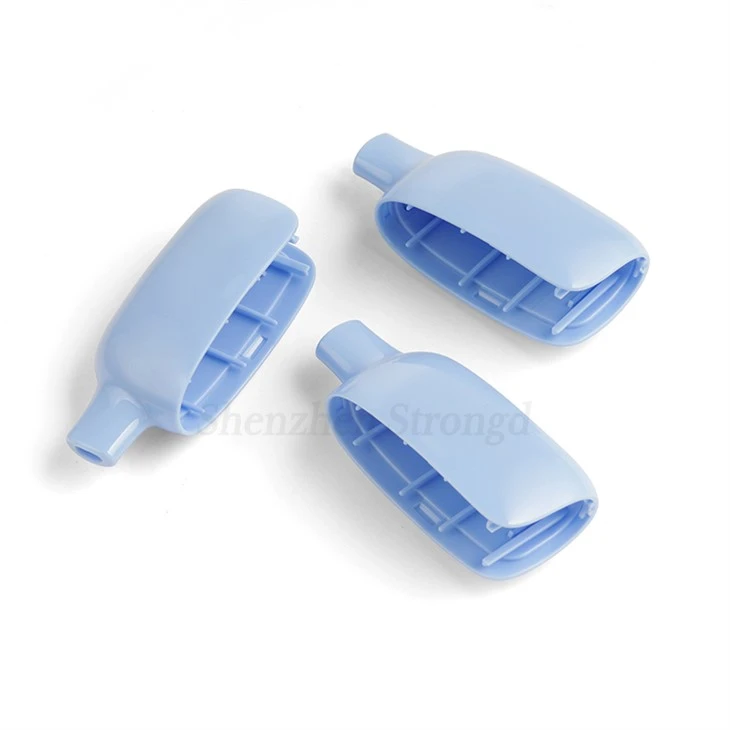

The medical industry has some of the most stringent accuracy requirements. PC parts are used for medical devices such as syringes, connectors, and housings. These parts need to be manufactured with extremely high precision to ensure patient safety and to meet the regulatory requirements of the industry.
Improving Accuracy
As a supplier, we are constantly looking for ways to improve the accuracy of our vacuum cast PC parts. One way we do this is by using advanced 3D printing technologies to create more accurate master patterns. 3D printing allows us to create complex geometries with high precision, which can then be replicated in the silicone mold and the final cast part.
We also invest in high - quality silicone molds. Silicone Mould Parts play a crucial role in the accuracy of the casting process. By using high - grade silicone materials and advanced mold - making techniques, we can ensure that the molds have a long service life and can accurately replicate the details of the master pattern.
In addition, we carefully control the casting process parameters. This includes monitoring the temperature, pressure, and pouring speed of the PC resin. By optimizing these parameters, we can minimize the shrinkage of the resin and improve the overall accuracy of the parts.
Conclusion
In conclusion, vacuum cast PC parts can achieve a high level of accuracy in terms of both dimensional accuracy and surface finish. As a Vacuum Casting PC Parts supplier, we have the expertise and the technology to meet the accuracy requirements of a wide range of applications. Whether you need parts for automotive, electronics, medical, or other industries, we can provide high - quality vacuum cast PC parts.
If you are interested in learning more about our Vacuum Casting Parts or would like to discuss your specific requirements, please feel free to reach out to us. We are always happy to engage in a conversation about how we can meet your needs and provide you with the best possible solutions.
References
- "Plastics Engineering Handbook of the Society of Plastics Engineers", edited by Michael L. Berins.
- "Manufacturing Engineering and Technology" by Serope Kalpakjian and Steven R. Schmid.
- Technical documentation from PC resin manufacturers.