
Hey there! As a TPU injection molding supplier, I've seen my fair share of challenges when it comes to making high - precision parts. In this blog, I'm gonna share some tips on how to overcome these hurdles.
Understanding the Basics of TPU Injection Molding
First off, let's quickly go over what TPU injection molding is. TPU, or thermoplastic polyurethane, is a super versatile material. It's got great elasticity, abrasion resistance, and can be molded into all sorts of shapes. TPU Molding is a process where molten TPU is injected into a mold cavity under high pressure. Once it cools and solidifies, you get your part.
But when you're aiming for high - precision parts, things get a bit more complicated. High - precision parts require tight tolerances, smooth surfaces, and consistent quality. And there are a bunch of factors that can mess with these requirements.
Challenges in TPU Injection Molding for High - Precision Parts
1. Material Flow and Filling
One of the biggest challenges is getting the TPU to flow evenly throughout the mold cavity. If the material doesn't flow properly, you can end up with incomplete filling, short shots, or uneven wall thickness. This is especially tricky for parts with complex geometries or thin walls.
The viscosity of TPU can vary depending on factors like temperature and shear rate. If the temperature is too low, the TPU will be too thick and won't flow well. On the other hand, if it's too high, the material might degrade, which can affect the part's mechanical properties.
2. Shrinkage and Warpage
TPU tends to shrink as it cools. This shrinkage can be inconsistent, leading to warpage or dimensional inaccuracies in the part. For high - precision parts, even a small amount of shrinkage can be a big problem.
The cooling rate also plays a huge role. If the part cools too quickly on one side and too slowly on the other, it can cause internal stresses that lead to warpage.
3. Surface Finish
A smooth surface finish is often crucial for high - precision parts, especially those used in TPU Injection Molding for Electronic Products. However, TPU can sometimes stick to the mold surface, leaving behind marks or defects.


Also, any impurities in the TPU or the mold can affect the surface finish. Scratches or roughness on the mold can be transferred to the part, resulting in an uneven surface.
4. Tooling and Mold Design
The design of the mold is key to producing high - precision parts. A poorly designed mold can lead to all sorts of problems, such as uneven filling, excessive shrinkage, and difficulty in ejecting the part.
For example, if the gate (the opening through which the TPU enters the mold) is too small, it can restrict the material flow. On the other hand, if it's too large, it can cause excessive shear stress and affect the part's quality.
Overcoming the Challenges
1. Optimizing Material Flow and Filling
To ensure proper material flow, it's important to control the temperature and pressure during the injection process. You can use a temperature controller to maintain a consistent temperature in the barrel of the injection molding machine.
Also, adjusting the injection speed can help. A slower injection speed might be better for parts with complex geometries, as it allows the TPU to flow more evenly. You can also use a multi - stage injection process, where the speed and pressure are adjusted at different stages of filling.
Another trick is to use mold flow analysis software. This software can simulate the flow of TPU in the mold cavity, allowing you to identify potential problems and make adjustments to the mold design or process parameters before actually making the part.
2. Managing Shrinkage and Warpage
To reduce shrinkage and warpage, you can control the cooling process. Using a cooling system with multiple zones can help ensure that the part cools evenly. You can also adjust the cooling time to allow the TPU to solidify properly.
In some cases, you might need to use post - molding treatments, such as annealing. Annealing involves heating the part to a specific temperature and then slowly cooling it. This can help relieve internal stresses and reduce shrinkage.
3. Improving Surface Finish
To get a smooth surface finish, you need to keep the mold clean and well - maintained. Regularly cleaning the mold can prevent impurities from sticking to the surface. You can also use mold release agents, but make sure to choose one that's compatible with TPU.
Polishing the mold surface can also improve the surface finish of the part. A smooth mold surface will transfer less roughness to the TPU.
4. Enhancing Tooling and Mold Design
Investing in high - quality tooling is essential. The mold should be designed with the specific requirements of the high - precision part in mind. This includes choosing the right gate location and size, as well as ensuring proper venting.
Venting is important to allow air to escape from the mold cavity during the injection process. If air is trapped, it can cause voids or other defects in the part.
Quality Control and Inspection
Even with all these measures in place, it's important to have a robust quality control system. You can use inspection tools like coordinate measuring machines (CMMs) to check the dimensions of the parts. Visual inspection can also help identify surface defects.
Regularly testing the mechanical properties of the parts, such as hardness and tensile strength, can ensure that they meet the required specifications.
Conclusion
Making high - precision parts through TPU injection molding is definitely a challenge, but it's not impossible. By understanding the challenges and implementing the right solutions, you can produce parts with the quality and precision that your customers demand.
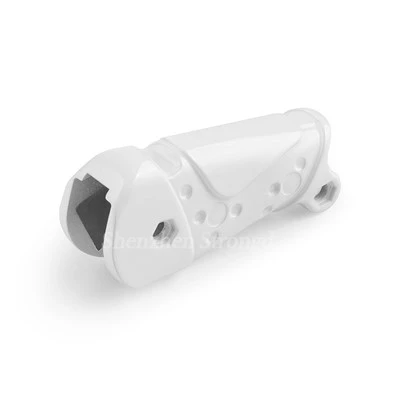
If you're in the market for high - precision TPU injection molded parts, Injection Molded Plastic Casing and other related products, don't hesitate to reach out for a purchase negotiation. We're here to help you with all your TPU injection molding needs.
References
- "Injection Molding Handbook" by O. J. Rudy
- "Thermoplastic Polyurethanes: A Comprehensive Review" in Polymer Reviews journal