
Nanotechnology, the manipulation of matter on an atomic, molecular, and supramolecular scale, has emerged as a revolutionary field with far - reaching implications across various industries. From electronics and medicine to energy and materials science, nanotechnology offers unprecedented opportunities for innovation and advancement. As a precision machining supplier, we understand the critical role that precision machining plays in enabling the successful implementation of nanotechnology applications. In this blog, we will explore the precision machining requirements for nanotechnology applications and how our expertise can meet these exacting standards.
Understanding Nanotechnology and Its Applications
Nanotechnology involves working with materials and structures at the nanoscale, typically defined as dimensions between 1 and 100 nanometers. At this scale, materials exhibit unique physical, chemical, and biological properties that differ significantly from their bulk counterparts. These properties can be harnessed to develop new and improved products and technologies with enhanced performance, functionality, and efficiency.
Some of the key applications of nanotechnology include:
- Electronics: Nanoscale materials are used in the development of high - performance transistors, memory devices, and sensors, enabling the miniaturization and increased functionality of electronic devices.
- Medicine: Nanoparticles can be engineered for targeted drug delivery, imaging, and diagnostics, improving the effectiveness and safety of medical treatments.
- Energy: Nanomaterials are used in solar cells, batteries, and fuel cells to enhance energy conversion and storage efficiency.
- Materials Science: Nanocomposites and nanostructured materials offer improved mechanical, thermal, and chemical properties, leading to the development of stronger, lighter, and more durable materials.
Precision Machining Requirements for Nanotechnology Applications
Precision machining is essential for the fabrication of components and devices used in nanotechnology applications. The following are some of the key precision machining requirements:
1. High Precision and Accuracy
In nanotechnology, even the slightest deviation from the desired dimensions can have a significant impact on the performance and functionality of the final product. Therefore, precision machining processes must be capable of achieving extremely high levels of precision and accuracy, typically in the range of nanometers or even sub - nanometers. This requires the use of advanced machining equipment, such as ultra - precision lathes, milling machines, and grinding machines, as well as sophisticated measurement and inspection techniques to ensure that the machined components meet the strict dimensional tolerances.
2. Surface Finish
The surface finish of nanoscale components is crucial for their performance. A smooth and defect - free surface can minimize friction, wear, and adhesion, and improve the electrical and optical properties of the material. Precision machining processes must be carefully controlled to achieve the desired surface roughness, typically in the range of nanometers. This may involve the use of specialized cutting tools, lubricants, and polishing techniques.
3. Material Compatibility
Nanotechnology applications often involve the use of advanced materials, such as semiconductors, ceramics, and polymers. These materials can have unique physical and chemical properties that require specific machining techniques and parameters. For example, some materials may be brittle and prone to cracking, while others may be soft and difficult to machine without causing deformation. As a precision machining supplier, we have extensive experience working with a wide range of materials and can select the most appropriate machining processes to ensure compatibility and optimal performance.
4. Cleanliness and Contamination Control
Contamination can have a detrimental effect on the performance of nanoscale components. Even small particles or impurities can alter the electrical, optical, or mechanical properties of the material. Therefore, precision machining processes must be carried out in a clean environment, and strict contamination control measures must be implemented. This may include the use of cleanrooms, filtered air systems, and proper handling and storage procedures for the machined components.
5. Micro - and Nano - scale Features
Many nanotechnology applications require the fabrication of micro - and nano - scale features, such as channels, pores, and patterns. Precision machining processes must be capable of creating these features with high resolution and accuracy. Techniques such as micro - milling, micro - drilling, and electron beam lithography can be used to fabricate these complex structures.


Our Capabilities as a Precision Machining Supplier
As a leading precision machining supplier, we are well - equipped to meet the precision machining requirements for nanotechnology applications.
- Advanced Equipment: We have invested in state - of - the - art precision machining equipment, including ultra - precision lathes, milling machines, and grinding machines. These machines are capable of achieving extremely high levels of precision and accuracy, ensuring that we can produce components with the tightest dimensional tolerances.
- Skilled Workforce: Our team of experienced engineers and machinists has in - depth knowledge of precision machining techniques and materials. They are trained to work with advanced materials and can develop customized machining solutions to meet the specific requirements of our customers.
- Quality Control: We have a rigorous quality control system in place to ensure that all our machined components meet the highest standards of quality. Our quality control team uses advanced measurement and inspection equipment, such as coordinate measuring machines (CMMs) and scanning electron microscopes (SEMs), to verify the dimensions, surface finish, and other critical properties of the components.
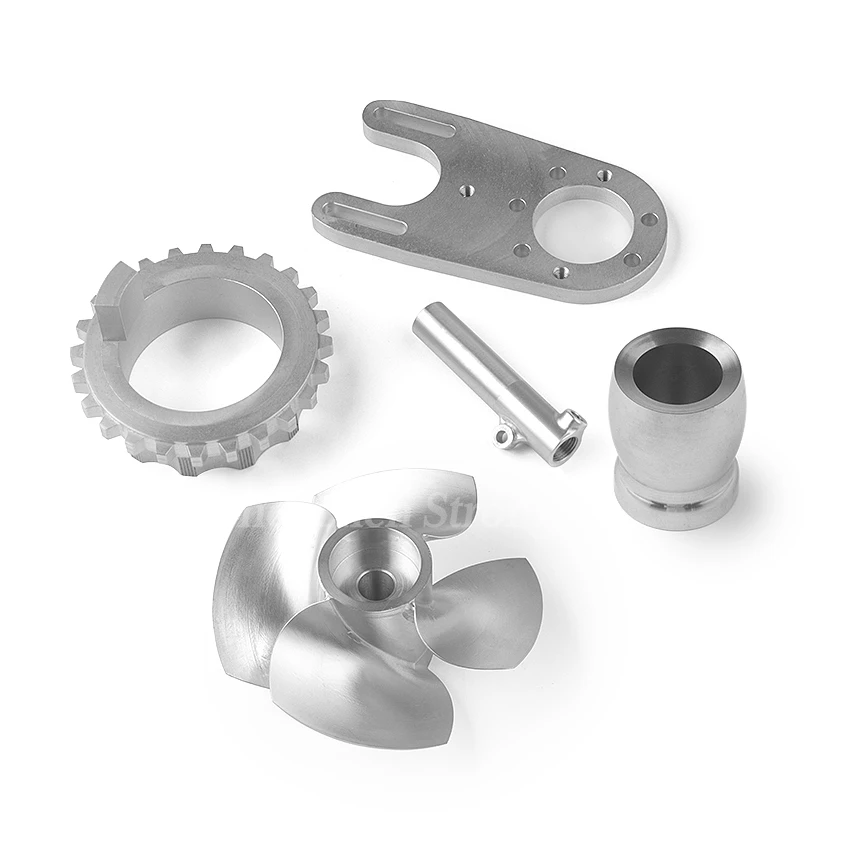
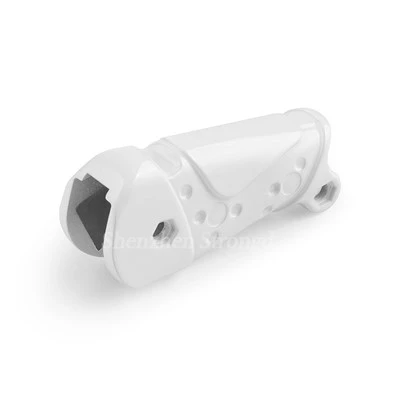
We offer a wide range of precision machining services, including CNC Turning Aluminum Parts, CNC Prototype Parts, and CNC Plastic Prototype. Whether you need a single prototype or a large - scale production run, we can provide you with high - quality precision machined components for your nanotechnology applications.
Contact Us for Your Precision Machining Needs
If you are looking for a reliable precision machining supplier for your nanotechnology applications, we would be delighted to hear from you. Our team of experts can work closely with you to understand your requirements and develop the most suitable machining solutions. We are committed to providing you with high - quality products, excellent customer service, and competitive pricing.
Please feel free to contact us to discuss your project and explore how we can support your nanotechnology endeavors. We look forward to partnering with you to bring your innovative ideas to life.
References
- Bhushan, B. (2007). Nanotribology and Nanomechanics: An Introduction. Springer.
- Madou, M. J. (2002). Fundamentals of Microfabrication: The Science of Miniaturization. CRC Press.
- Rai, P. K., & Ingle, A. (2012). Nanomaterials in Medicine and Biology. Wiley - VCH.