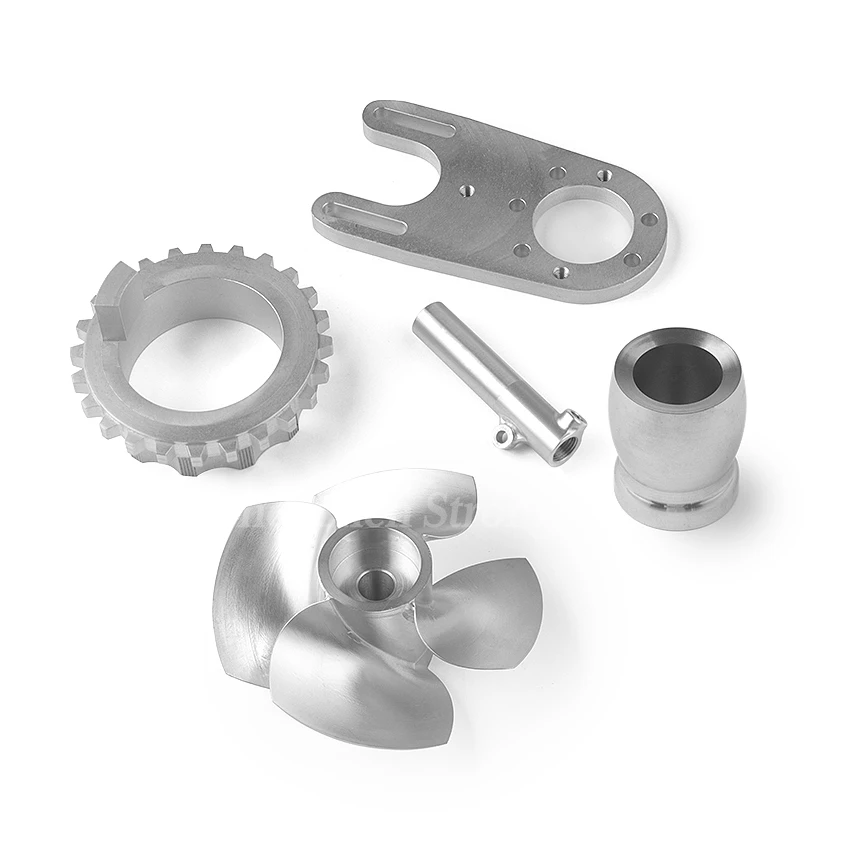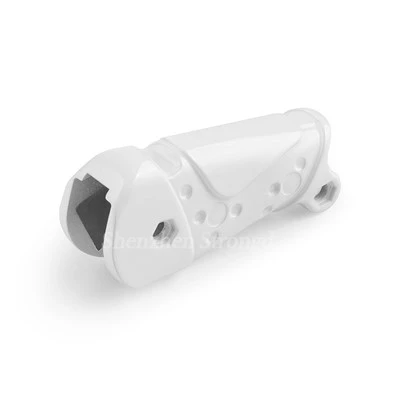

Fatigue resistance is a critical property when it comes to the performance and durability of materials, especially in the context of vacuum-cast polycarbonate (PC) parts. As a prominent supplier of Vacuum Casting PC Parts, I have witnessed firsthand the importance of understanding this characteristic. In this blog, I will delve into what fatigue resistance means for vacuum-cast PC parts, its influencing factors, and its significance in various applications.
Understanding Fatigue Resistance
Fatigue resistance refers to a material's ability to withstand repeated loading and unloading cycles without experiencing failure. In the case of vacuum-cast PC parts, this property is crucial because these parts are often subjected to cyclic stresses in real-world applications. For example, a Vacuum Casting Plastic Electronic Shell may be repeatedly opened and closed, or a Vacuum Casting Plastic Case might be exposed to vibrations during transportation.
When a vacuum-cast PC part is under cyclic loading, microscopic cracks can initiate and propagate over time. These cracks can eventually lead to the part's failure, which can be catastrophic in some applications. Therefore, a high fatigue resistance is desirable to ensure the long-term reliability of the parts.


Factors Affecting Fatigue Resistance of Vacuum-Cast PC Parts
Material Properties
The inherent properties of polycarbonate play a significant role in determining the fatigue resistance of vacuum-cast parts. Polycarbonate is known for its high impact strength, transparency, and good dimensional stability. However, its fatigue resistance can be influenced by factors such as molecular weight, chain orientation, and the presence of additives.
A higher molecular weight generally leads to better fatigue resistance because longer polymer chains can better distribute the applied stress. Chain orientation, which can be affected by the vacuum casting process, also matters. Parts with a more uniform chain orientation tend to have improved fatigue performance. Additives, such as fillers and reinforcements, can be used to enhance the fatigue resistance of PC parts. For example, glass fibers can increase the stiffness and strength of the material, thereby improving its ability to withstand cyclic loading.
Vacuum Casting Process
The vacuum casting process itself can have a profound impact on the fatigue resistance of PC parts. During the casting process, factors such as temperature, pressure, and cooling rate need to be carefully controlled. If the temperature is too high or the cooling rate is too fast, internal stresses can develop in the part, which can reduce its fatigue resistance.
Proper degassing during the vacuum casting process is also essential. Trapped air bubbles can act as stress concentrators, initiating cracks and reducing the part's ability to withstand cyclic loading. By ensuring a high-quality vacuum casting process, we can minimize these defects and improve the fatigue resistance of the PC parts.
Design of the Part
The design of the vacuum-cast PC part can significantly affect its fatigue resistance. Sharp corners, notches, and sudden changes in cross-section can create stress concentrations, which can lead to crack initiation and propagation. Therefore, it is important to design parts with smooth transitions and rounded corners to distribute the stress more evenly.
The thickness of the part also matters. A part that is too thin may not have enough strength to withstand cyclic loading, while a part that is too thick may be more prone to internal stresses and warping. By optimizing the part design, we can enhance its fatigue resistance and overall performance.
Significance of Fatigue Resistance in Different Applications
Electronics Industry
In the electronics industry, vacuum-cast PC parts are widely used for electronic shells and cases. These parts need to have good fatigue resistance to ensure that they can withstand the repeated opening and closing, as well as the vibrations and impacts during transportation and use. A high fatigue resistance can prevent the parts from cracking or breaking, which can protect the delicate electronic components inside.
Automotive Industry
In the automotive industry, PC parts are used in various applications, such as interior trim, instrument panels, and lighting components. These parts are often exposed to vibrations, temperature changes, and mechanical stresses during vehicle operation. A high fatigue resistance is essential to ensure the long-term reliability and durability of these parts, which can contribute to the overall safety and performance of the vehicle.
Medical Industry
In the medical industry, vacuum-cast PC parts are used for medical device housings, surgical instruments, and diagnostic equipment. These parts need to have excellent fatigue resistance to ensure that they can withstand the repeated sterilization processes, as well as the mechanical stresses during use. A high fatigue resistance can prevent the parts from failing, which can be critical in medical applications where patient safety is at stake.
Testing and Evaluation of Fatigue Resistance
To ensure the quality and performance of our vacuum-cast PC parts, we conduct rigorous testing and evaluation of their fatigue resistance. One common method is the fatigue testing, where the parts are subjected to cyclic loading under controlled conditions. The number of cycles to failure is recorded, and the fatigue life of the part is determined.
We also use non-destructive testing methods, such as ultrasonic testing and X-ray inspection, to detect any internal defects or cracks in the parts. By combining these testing methods, we can accurately assess the fatigue resistance of our PC parts and ensure that they meet the high standards required by our customers.
Conclusion
In conclusion, fatigue resistance is a crucial property for vacuum-cast PC parts. It is affected by various factors, including material properties, the vacuum casting process, and the part design. A high fatigue resistance is essential for the long-term reliability and durability of these parts in different applications, such as the electronics, automotive, and medical industries.
As a supplier of Vacuum Casting PC Parts, we are committed to providing our customers with high-quality parts that have excellent fatigue resistance. We use advanced materials, state-of-the-art vacuum casting technology, and rigorous testing methods to ensure that our parts meet the highest standards.
If you are looking for reliable vacuum-cast PC parts with high fatigue resistance, please feel free to contact us for more information and to discuss your specific requirements. We are here to help you find the best solutions for your applications.
References
- Callister, W. D., & Rethwisch, D. G. (2011). Materials Science and Engineering: An Introduction. Wiley.
- ASTM International. (2019). ASTM D671 - 19 Standard Test Method for Rubber Property - Fatigue Testing (Flexing) in Compression.
- ISO 13479:2016. Plastics - Determination of fatigue properties under uniaxial loading.