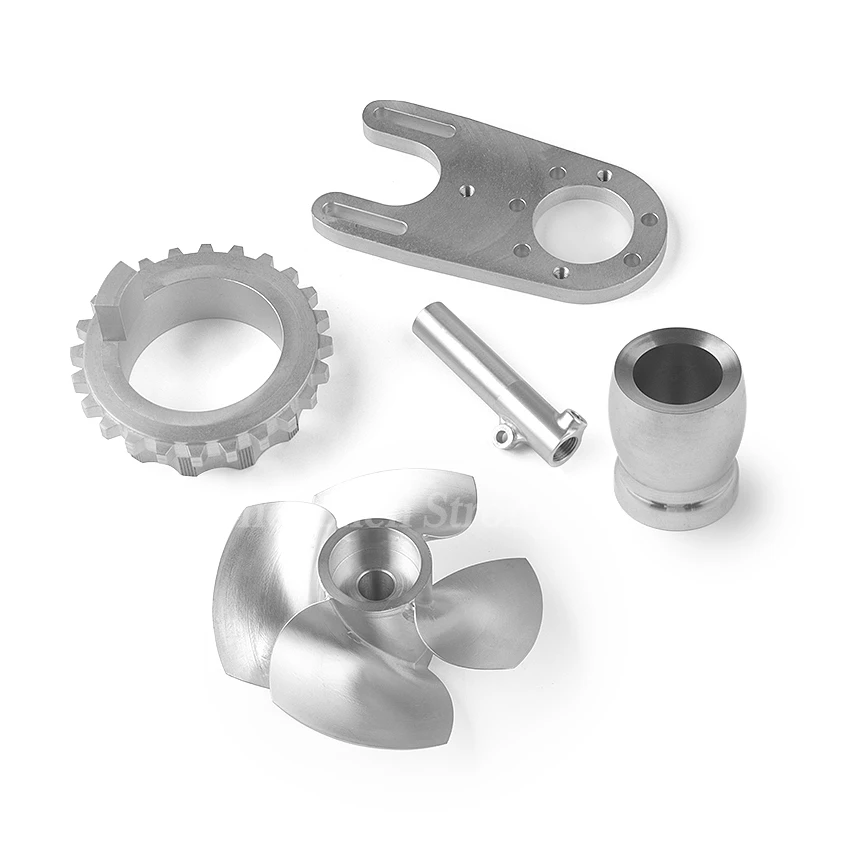

As a provider of SLA 3D printing services, I often encounter inquiries regarding the capabilities of our technology, especially when it comes to specific material properties. One question that has been increasingly common is whether SLA 3D printing can produce parts with a low dielectric constant. In this blog post, I will delve into the science behind dielectric constants, the nature of SLA 3D printing, and explore the possibility of creating parts with low dielectric constants using our service.
Understanding Dielectric Constant
Before we discuss whether SLA 3D printing can achieve low dielectric constants, it's essential to understand what a dielectric constant is. The dielectric constant, also known as relative permittivity, is a measure of how well a material can store electrical energy in an electric field. It is a dimensionless quantity that compares the ability of a material to store electrical energy relative to a vacuum. Materials with a low dielectric constant are less effective at storing electrical energy and are often used in applications where minimizing electrical interference is crucial, such as in high - frequency electronics, telecommunications, and microwave devices.
The Basics of SLA 3D Printing
Stereolithography (SLA) is one of the oldest and most precise 3D printing technologies available. It works by using a laser to selectively cure a liquid photopolymer resin layer by layer, creating a solid 3D object. The high precision of SLA 3D printing makes it suitable for a wide range of applications, from rapid prototyping to the production of end - use parts. For more information on the precision and complexity achievable with SLA 3D printing, you can refer to 3D Resin Printing: Born For Ultimate Precision And Complex Designs.
The choice of resin is a critical factor in SLA 3D printing. Different resins have different properties, including mechanical strength, flexibility, and chemical resistance. However, when it comes to dielectric properties, the resin selection becomes even more important.
Can SLA 3D Printing Produce Parts with Low Dielectric Constant?
The answer is yes, but it depends on several factors. Firstly, the choice of resin plays a vital role. There are specialized photopolymer resins available in the market that are formulated to have low dielectric constants. These resins are often engineered with specific chemical compositions to reduce their ability to store electrical energy.
For example, some fluoropolymer - based resins have inherently low dielectric constants due to the unique properties of fluorine atoms. Fluorine has a high electronegativity, which reduces the polarization of the molecules in the resin, resulting in a lower dielectric constant. By using these specialized resins, our SLA 3D printing service can produce parts with low dielectric constants.
Another factor is the printing process itself. During the SLA 3D printing process, the curing conditions can affect the final properties of the printed part. If the resin is not cured properly, it may contain uncured monomers or have a non - uniform structure, which can potentially increase the dielectric constant. Therefore, precise control of the laser power, exposure time, and layer thickness is necessary to ensure that the printed parts have the desired dielectric properties.
Applications of SLA - Printed Parts with Low Dielectric Constant
The ability to produce parts with low dielectric constants using SLA 3D printing opens up a wide range of applications. In the field of electronics, these parts can be used in printed circuit boards (PCBs), where minimizing signal loss and interference is crucial. For example, SLA - printed insulators with low dielectric constants can be used to separate conductive traces on a PCB, reducing the capacitance between them and improving the overall performance of the circuit.
In the telecommunications industry, low - dielectric - constant parts can be used in antennas and waveguides. These components need to transmit and receive electromagnetic waves with minimal loss, and parts with low dielectric constants can help achieve this goal. For more examples of resin 3D - printed parts, you can visit Resin 3D Printing Parts.
Challenges and Limitations
While it is possible to print parts with low dielectric constants using SLA 3D printing, there are some challenges and limitations. One of the main challenges is the cost of specialized resins. Resins with low dielectric constants are often more expensive than standard photopolymer resins, which can increase the overall cost of production.
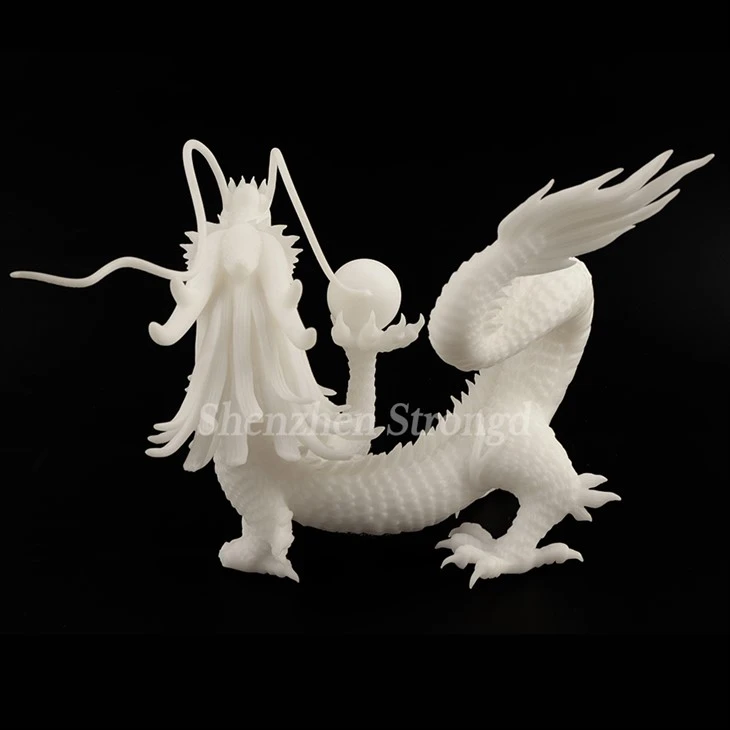

Another limitation is the mechanical properties of the parts. Some low - dielectric - constant resins may have lower mechanical strength or flexibility compared to standard resins. This can limit their use in applications where high mechanical performance is required. However, ongoing research and development in the field of photopolymer resins are constantly improving the mechanical properties of these specialized resins.
Quality Control and Testing
To ensure that the SLA - printed parts have the desired low dielectric constant, quality control and testing are essential. We use advanced testing equipment to measure the dielectric constant of the printed parts. This includes impedance analyzers and network analyzers, which can accurately measure the electrical properties of the parts over a wide range of frequencies.
During the printing process, we also conduct in - process inspections to monitor the quality of the printed parts. This helps us identify any potential issues early on and make adjustments to the printing parameters if necessary. For more information on the SLA 3D model - making process and quality control, you can refer to SLA 3D Model Making.
Conclusion
In conclusion, our SLA 3D printing service can produce parts with low dielectric constants, thanks to the availability of specialized resins and precise control of the printing process. These parts have a wide range of applications in high - frequency electronics, telecommunications, and other industries where minimizing electrical interference is crucial.
However, there are challenges and limitations, such as the cost of specialized resins and potential trade - offs in mechanical properties. Through continuous research and development, we are constantly working to overcome these challenges and improve the performance of our SLA - printed parts.
If you are interested in using our SLA 3D printing service to produce parts with low dielectric constants, we encourage you to contact us for a detailed discussion. Our team of experts can help you select the right resin, optimize the printing process, and ensure that the final parts meet your specific requirements.
References
- "Handbook of Dielectric Materials: Properties and Applications" by John Schelkunoff and Sidney S. Sommer.
- "3D Printing Technologies: Principles and Applications" by Ian Gibson, David W. Rosen, and Brent Stucker.