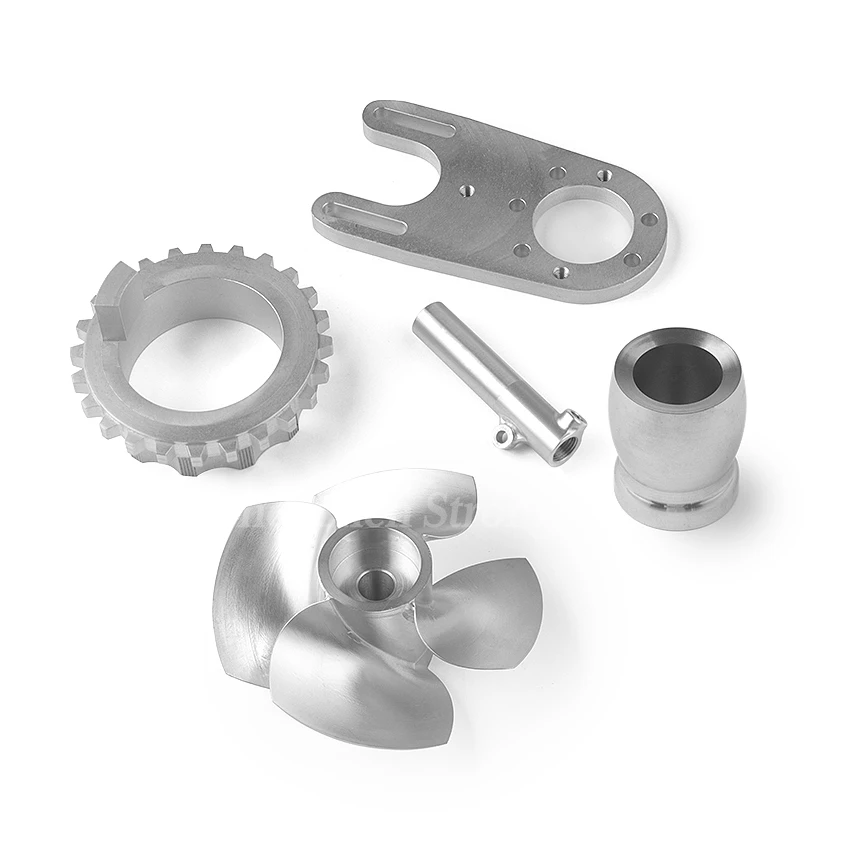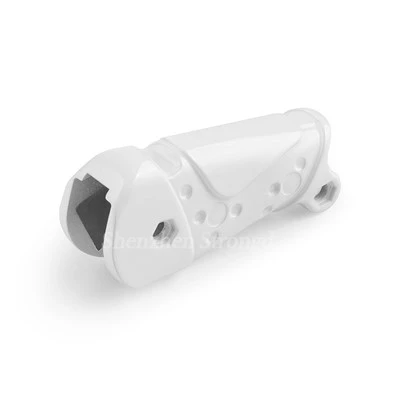

Hey there! As a supplier of CNC parts, I often get asked about the difference between CNC turning parts and CNC milling parts. It's a common question, and understanding these differences can really help you make the right choice for your projects. So, let's dive in and break it down.
CNC Turning Parts
First off, let's talk about CNC turning. In simple terms, CNC turning is a machining process where a cutting tool is used to remove material from a rotating workpiece. Think of it like a potter's wheel, but instead of clay, we're working with metal, plastic, or other materials. The workpiece spins on a lathe, and the cutting tool moves along the axis of rotation to create the desired shape.
One of the key features of CNC turning is its ability to create cylindrical parts. You know, those round, tube - like shapes. This process is great for making parts like shafts, pins, and bushings. Since the workpiece rotates, it's easy to achieve high levels of symmetry and precision on the outer and inner diameters of the part.
Another advantage of CNC turning is its efficiency. Once the setup is done, the process can run continuously, churning out parts at a relatively fast pace. This makes it ideal for high - volume production. For example, if you need a large number of identical bolts or screws, CNC turning is the way to go.
But it's not all roses. CNC turning has its limitations. It's mainly designed for creating parts with rotational symmetry. If you need a part with complex shapes that aren't circular or cylindrical, turning might not be the best option. Also, creating internal features like deep holes or complex internal geometries can be a bit tricky and may require additional operations.
CNC Milling Parts
Now, let's move on to CNC milling. Unlike turning, where the workpiece rotates, in CNC milling, the workpiece is held stationary, and the cutting tool rotates. The cutting tool moves in multiple axes (usually three, but can be up to five or more in advanced machines) to remove material from the workpiece.
CNC milling is incredibly versatile. It can create parts with almost any shape, including flat surfaces, slots, pockets, and even three - dimensional contours. This makes it suitable for a wide range of applications, from simple brackets to complex aerospace components.
One of the big selling points of CNC milling is its ability to create parts with high precision and intricate details. With the right programming and cutting tools, you can achieve tight tolerances and smooth surface finishes. This is crucial for parts that need to fit together perfectly or have a specific aesthetic appearance.
However, CNC milling also has its drawbacks. It's generally slower than CNC turning, especially for large - volume production. The setup time can be longer, as the machine needs to be programmed to move the cutting tool in the right way for each part. Also, the cost of the cutting tools and the machine itself can be higher, which can drive up the overall cost of production.
Key Differences
Let's summarize the key differences between CNC turning and CNC milling:
1. Workpiece Movement
- In CNC turning, the workpiece rotates, while in CNC milling, the workpiece is stationary, and the cutting tool rotates.
2. Shape Creation
- CNC turning is best for creating cylindrical and rotationally symmetric parts. CNC milling can create a wider variety of shapes, including complex 3D geometries.
3. Production Speed
- CNC turning is generally faster for high - volume production of simple, rotationally symmetric parts. CNC milling is slower but more versatile for low - to medium - volume production of complex parts.
4. Precision and Detail
- Both processes can achieve high precision, but CNC milling is better at creating intricate details and complex geometries.
5. Cost
- The cost of CNC turning is often lower for high - volume production of simple parts. CNC milling can be more expensive due to longer setup times and higher tooling costs, especially for complex parts.
Applications
The differences in these two processes also lead to different applications.
CNC Turning Applications
- Automotive Industry: Many automotive components, such as axles, drive shafts, and wheel hubs, are made using CNC turning. These parts need to be strong, precise, and have a high level of symmetry, which turning can easily achieve. You can check out our CNC Auto Car Parts for more examples.
- Electronics Industry: Small components like connectors and pins often require the precision and efficiency of CNC turning. These parts need to be made in large quantities with consistent quality.
CNC Milling Applications
- Aerospace Industry: Aerospace parts need to be lightweight, strong, and have complex geometries. CNC milling is used to create parts like turbine blades, aircraft frames, and engine components.
- Medical Industry: Surgical instruments, implants, and medical device components often require high precision and intricate details. CNC milling can produce these parts with the necessary accuracy and surface finish. You can explore our CNC Aluminum Parts which are commonly used in these industries.
Choosing the Right Process
So, how do you choose between CNC turning and CNC milling for your project? Well, it depends on several factors:
1. Part Shape
- If your part is cylindrical or has rotational symmetry, CNC turning is likely the best choice. If it has complex shapes, flat surfaces, or 3D contours, CNC milling is probably more suitable.
2. Production Volume
- For high - volume production of simple parts, CNC turning is more cost - effective. For low - to medium - volume production of complex parts, CNC milling might be the better option.
3. Precision Requirements
- If your part requires high precision and intricate details, especially in non - circular geometries, CNC milling is the way to go.
4. Budget
- Consider your budget and the cost of each process. Remember to factor in setup costs, tooling costs, and production time.
Our Services as a CNC Parts Supplier
As a CNC parts supplier, we have the expertise and equipment to handle both CNC turning and CNC milling. Whether you need a simple turned part or a complex milled component, we can help. Our team of experienced engineers and machinists can work with you to determine the best process for your project, ensuring that you get high - quality parts at a competitive price.
We offer a wide range of materials, including aluminum, steel, brass, and plastics, to meet your specific requirements. And with our state - of - the - art CNC machines, we can achieve tight tolerances and excellent surface finishes. Check out our Milling Turning CNC Machined parts to see some of our work.
If you're in the market for CNC parts, we'd love to hear from you. Whether you have a small prototype project or a large - scale production order, we're ready to take on the challenge. Contact us today to discuss your needs and get a quote. We're committed to providing you with the best possible service and the highest quality parts.


References
- "CNC Machining Handbook" by John Doe
- "Modern Manufacturing Processes" by Jane Smith
- Industry whitepapers on CNC turning and milling processes