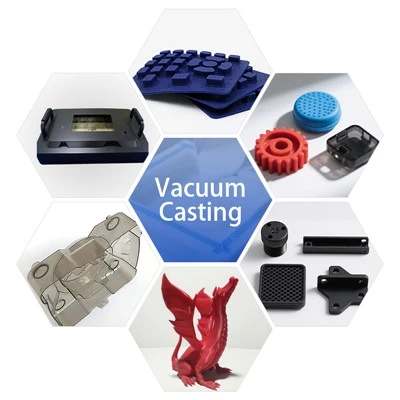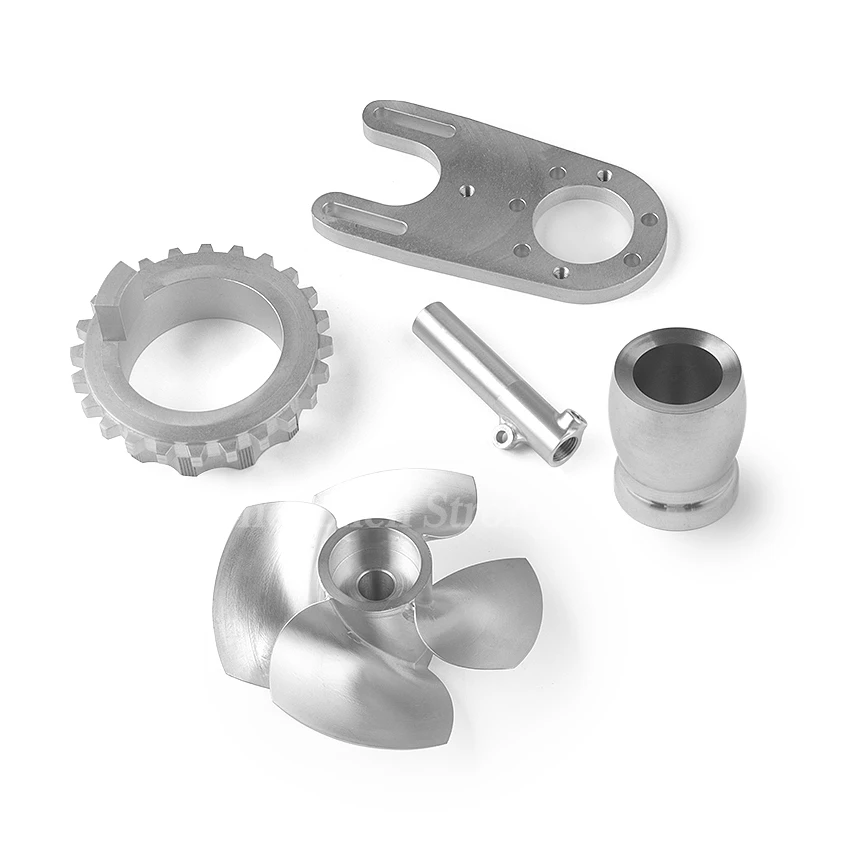

I'm running an SLA 3D printing service, and one question that keeps coming up from clients is about the influence of print speed on the quality of our SLA 3D printing. I've decided to break down this relationship to give you a clearer idea.
Let's first understand what SLA 3D printing is. SLA stands for Stereolithography. It's a process that uses a UV laser to cure liquid resin layer by layer to create a solid 3D object. It's known for its high - precision and ability to create complex designs. You can learn more about its precision and complex design capabilities here: 3D Resin Printing: Born For Ultimate Precision And Complex Designs.
How Print Speed Works in SLA 3D Printing
In SLA 3D printing, the print speed is mainly determined by how fast the UV laser can cure the resin. The speed can be adjusted based on the requirements of the project. A higher print speed means the laser moves faster across the resin surface, curing the layers in less time. On the flip side, a lower print speed means the laser takes more time to cure each layer.
Impact on Surface Finish
One of the most noticeable effects of print speed on SLA 3D printing quality is the surface finish. When we print at a high speed, the laser moves quickly. This can sometimes lead to uneven curing of the resin. The result is a rougher surface finish on the printed object. Small bumps or ridges may appear, which can be a big deal if you're looking for a smooth finish, like for prototypes that need to look sleek or parts that will be in direct contact with other components.
For projects where the surface finish is crucial, like Resin 3D Printing Parts used in high - end consumer products or medical devices, we usually recommend a lower print speed. This allows the laser to cure the resin more evenly, resulting in a much smoother surface.
Dimensional Accuracy
Dimensional accuracy is another key factor affected by print speed. High print speeds can cause the resin to not fully cure or expand and contract unevenly during the printing process. This leads to deviations from the intended dimensions of the 3D model. For parts that need to fit precisely with other components, such as in mechanical assemblies or custom - made replacement parts, even a small dimensional inaccuracy can render the part useless.
At our service, when clients are printing 3D Printing Plastic Parts with strict dimensional requirements, we take the time to adjust the print speed accordingly. We ensure that the parts are printed accurately, down to the smallest detail.
Strength and Durability of the Printed Parts
The strength and durability of SLA - printed parts are also influenced by print speed. When the print speed is too high, the resin may not be cured thoroughly. This can result in parts that are brittle and prone to cracking or breaking under stress. On the other hand, a slower print speed allows for more complete curing of the resin, which generally leads to stronger and more durable parts.
For example, if you're printing functional parts that will be subjected to regular wear and tear, such as gears or brackets, a lower print speed can significantly improve the part's performance and lifespan.
Time and Cost Considerations
Now, I know what you're thinking. If lower print speed is so great for quality, why not always print at a slow speed? Well, there are trade - offs. Printing at a lower speed means longer production times. For us as a service provider, longer production times translate to higher costs, which we then have to pass on to the clients to some extent.

So, it's a balancing act. We need to find the sweet spot between print speed, quality, and cost. For projects with less strict quality requirements and tight deadlines, a higher print speed might be the way to go. But for those projects where quality is non - negotiable, we're willing to invest the extra time to ensure the best results.
Case Studies
Let me share a couple of case studies to illustrate these points.
We had a client who needed some custom - designed jewelry prototypes. They wanted a very smooth surface finish and high level of detail. Initially, we printed the prototypes at a relatively high speed to save time. However, the surface finish was not up to par, and there were some minor dimensional inaccuracies. We then re - printed the prototypes at a lower speed. The difference was night and day. The surface was smooth, and the dimensions were spot - on. The client was extremely happy with the final result.
On the other hand, we had another client who needed a large quantity of simple - shaped spacers for a short - term project. They were more concerned about getting the parts quickly and at a lower cost than having the highest possible quality. In this case, we printed the spacers at a high speed. The parts were produced in a shorter time, and the client was satisfied with the balance between cost and quality.
Our Approach as a Service Provider
As an SLA 3D printing service provider, we always start by having an in - depth discussion with our clients about their project requirements. We ask about the intended use of the parts, the required surface finish, dimensional accuracy, and any other specific needs. Based on this information, we recommend the most suitable print speed.
We also have a team of experienced technicians who closely monitor the printing process. They can make real - time adjustments to the print speed if they notice any issues during the printing, ensuring that the final product meets or exceeds the client's expectations.
Wrapping Up and Next Steps
If you're thinking about using SLA 3D printing for your project, understanding the influence of print speed on quality is essential. Whether you're looking for 3D Resin Printing with ultimate precision or 3D Printing Plastic Parts for a specific application, we're here to help. Let's talk about your project, and we can work together to find the best print speed and quality combination for your needs. If you have any questions or want to start a procurement discussion, don't hesitate to reach out.
References
- Gibson, I., Rosen, D. W., & Stucker, B. (2015). Additive Manufacturing Technologies: 3D Printing, Rapid Prototyping, and Direct Digital Manufacturing. Springer.
- Hopkinson, N., Hague, R., & Dickens, P. M. (2006). Rapid Manufacturing: An Industrial Revolution for the Digital Age. Wiley.