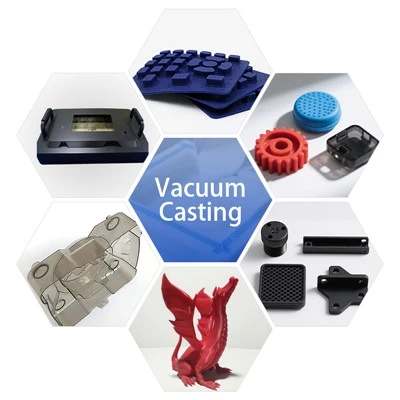

Hey there! As a supplier of silicon rubber casting, I often get asked if it can be used for mass production. Well, let's dive right into this topic and break it down.
First off, what exactly is silicon rubber casting? It's a process where a silicone mold is created from a master pattern. Then, liquid silicone rubber is poured into the mold, and after it cures, you get a replica of the master pattern. It's a popular method in the manufacturing world because it can produce parts with high precision and good surface finish.
Advantages of Silicon Rubber Casting for Mass Production
One of the biggest advantages of silicon rubber casting for mass - production is its cost - effectiveness, especially in the initial stages. Creating a silicone mold is relatively inexpensive compared to other tooling methods like injection molding. You don't need to invest a huge amount of money in expensive machinery and complex tooling. This makes it a great option for small to medium - scale mass production runs.
Another plus is the flexibility it offers. Silicon rubber can be formulated to have different properties such as hardness, flexibility, and chemical resistance. So, whether you need a soft and squishy part or a hard and rigid one, silicon rubber casting can deliver. It can also replicate fine details on the master pattern, which is crucial for products that require high - quality aesthetics or functional precision.
Silicon rubber casting also allows for quick turnaround times. Once the master pattern is ready, the silicone mold can be made in a relatively short period. And the casting process itself is not overly time - consuming. This means you can get your products to the market faster, which is a huge advantage in today's competitive business environment.
Limitations of Silicon Rubber Casting for Mass Production
However, silicon rubber casting isn't without its limitations when it comes to mass production. One of the main issues is the limited lifespan of the silicone mold. Over time, with repeated use, the mold can wear out, especially if the parts have complex geometries or sharp edges. This means that you may need to replace the mold after a certain number of casting cycles, which can add to the overall cost in the long run.
The production rate is another factor. Compared to high - volume manufacturing methods like injection molding, silicon rubber casting is relatively slow. The curing time of the silicon rubber can take some time, and you can only cast a limited number of parts at a time. So, if you need to produce a large number of parts in a very short period, silicon rubber casting may not be the best option.
The material cost can also be a concern. While the initial investment in tooling is low, the cost of the silicon rubber material itself can add up, especially for large - scale production. And depending on the specific requirements of your product, you may need to use more expensive specialty silicone rubbers, which can further increase the cost.
Real - World Applications
Silicon rubber casting is widely used in various industries for mass production. In the automotive industry, it can be used to make gaskets, seals, and small rubber components. These parts often require high precision and good sealing properties, which silicon rubber casting can provide.
In the consumer goods industry, it's used to produce items like phone cases, toys, and kitchenware. The ability to replicate fine details and the flexibility to choose different material properties make it a popular choice for these types of products.
For the medical industry, silicon rubber casting is used to make medical devices and components. The biocompatibility of some silicon rubbers makes them suitable for use in contact with the human body, and the high - precision casting process ensures the quality and functionality of the medical products.
When to Choose Silicon Rubber Casting for Mass Production
So, when should you choose silicon rubber casting for mass production? If you're in the early stages of product development and want to test the market with a small - to - medium - scale production run, silicon rubber casting is a great option. It allows you to get your product out there without a huge upfront investment.


If your product has complex geometries or requires high - quality surface finish and fine details, silicon rubber casting can deliver better results compared to some other manufacturing methods. And if you need a quick turnaround time to meet market demand, the relatively fast production process of silicon rubber casting can be a deciding factor.
Comparing with Other Mass - Production Methods
Let's compare silicon rubber casting with injection molding, which is a well - known mass - production method. Injection molding is great for high - volume production runs. It can produce a large number of parts very quickly, and the cost per part is relatively low when producing in large quantities. However, the initial investment in injection molding tooling is extremely high, and it's not very flexible when it comes to making design changes.
On the other hand, silicon rubber casting is more flexible, has a lower upfront cost, and is better for small to medium - scale production. But it can't match the high - volume production capabilities of injection molding.
Conclusion
In conclusion, silicon rubber casting can be used for mass production, but it has its pros and cons. It's a great option for small to medium - scale production runs, especially when you need flexibility, quick turnaround times, and high - quality replication of details. However, for very large - scale mass production, you may need to consider other methods.
If you're interested in exploring silicon rubber casting for your mass - production needs, I'd love to have a chat. We can discuss your specific requirements, the best approach for your project, and how we can work together to achieve your goals. Whether you're looking for Vacuum Casting Silicone Mold, Vacuum Casting Of Rubber Shell Parts, or Rubber Plastic Part Vacuum Casting, we've got the expertise and experience to help. So, don't hesitate to reach out and start the conversation about your next project!
References
- Groover, M. P. (2010). Fundamentals of Modern Manufacturing: Materials, Processes, and Systems. Wiley.
- Rosato, D. V., & Rosato, D. V. (2000). Injection Molding Handbook. Kluwer Academic Publishers.