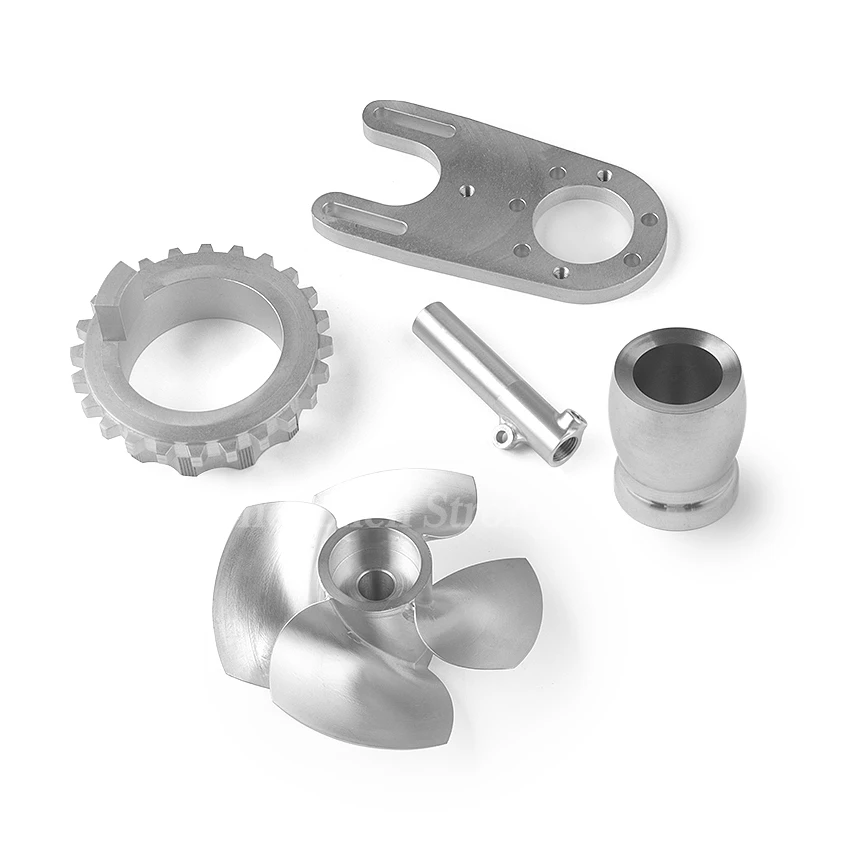

Hey there! I'm a supplier in the Nylon SLS Printing business, and today I wanna chat about how to ensure the dimensional accuracy of Nylon SLS Printing parts. It's a crucial aspect, especially when you're looking for high - quality products. Let's dig right in!
Understanding the Basics of Nylon SLS Printing
First off, what is Nylon SLS Printing? Well, SLS stands for Selective Laser Sintering. In this process, a high - power laser selectively fuses small particles of nylon powder together to create a 3D object. It's a pretty cool technology that offers a lot of advantages, like the ability to create complex geometries that would be difficult or impossible with traditional manufacturing methods. You can learn more about it on our Nylon SLS Printing page.
One of the key things to understand is that the dimensional accuracy of the printed parts depends on several factors. These factors can be broadly categorized into material - related, machine - related, and process - related factors.
Material - Related Factors
The quality and properties of the nylon powder play a huge role in dimensional accuracy.


Powder Particle Size and Distribution
The size and distribution of the powder particles matter a great deal. If the particles are too large or have a wide size distribution, it can lead to uneven sintering. This uneven sintering can cause variations in the density of the printed part, which in turn affects its dimensions. For example, areas with larger particles might not sinter as well as areas with smaller particles, resulting in a part that's not as precise as it should be.
Powder Moisture Content
Moisture in the nylon powder can also be a problem. When the powder has too much moisture, it can cause issues during the sintering process. The moisture can turn into steam, which can create voids or bubbles in the printed part. These voids can affect the part's strength and dimensional accuracy. To avoid this, it's important to store the powder in a dry environment and, if necessary, dry it before use.
Machine - Related Factors
The SLS printing machine itself has a big impact on the dimensional accuracy of the parts.
Laser Power and Scanning Speed
The laser power and scanning speed are two critical parameters. If the laser power is too low, the powder might not sinter properly, leading to a weak and inaccurate part. On the other hand, if the laser power is too high, it can cause over - sintering, which can also affect the dimensions. The scanning speed also needs to be just right. A too - fast scanning speed might not give the laser enough time to fully sinter the powder, while a too - slow speed can lead to over - heating and distortion.
Build Chamber Temperature
Maintaining a consistent build chamber temperature is essential. If the temperature fluctuates, it can cause the part to expand or contract during the printing process. For example, if the temperature drops suddenly, the part might shrink, leading to dimensional inaccuracies. Most SLS machines have a temperature control system, but it's important to monitor it regularly to make sure it's working properly.
Process - Related Factors
The way the printing process is set up and managed can also affect the dimensional accuracy.
Part Orientation
The orientation of the part in the build chamber matters a lot. Different orientations can result in different levels of stress and shrinkage during the printing and cooling process. For example, if a part is oriented in a way that causes uneven cooling, it can lead to warping. It's often a good idea to do some test prints with different orientations to find the one that gives the best dimensional accuracy.
Support Structures
Support structures are sometimes necessary to hold the part in place during the printing process. However, if the support structures are not designed or placed correctly, they can affect the part's dimensions. For example, if the support structures are too rigid, they can prevent the part from shrinking naturally during cooling, leading to internal stresses and dimensional inaccuracies. On the other hand, if the support structures are too weak, they might not provide enough support, causing the part to deform.
Post - Processing for Dimensional Accuracy
After the printing is done, post - processing steps can also be used to improve dimensional accuracy.
Machining
In some cases, machining the printed part can help achieve the desired dimensions. This can involve milling, drilling, or turning operations. However, it's important to note that machining should be done carefully, as nylon is a relatively soft material and can be easily damaged. You can find some great examples of post - processed parts on our SLS 3D Printing PA Parts page.
Heat Treatment
Heat treatment can also be used to relieve internal stresses in the part. When a part cools down after printing, it can develop internal stresses that can cause it to warp or change dimensions over time. Heat treatment can help relax these stresses and improve the part's dimensional stability.
Quality Control and Inspection
To ensure the dimensional accuracy of the Nylon SLS printed parts, quality control and inspection are crucial.
In - Process Monitoring
During the printing process, it's a good idea to monitor the machine's parameters and the appearance of the part. This can help detect any issues early on. For example, if the laser power seems to be fluctuating or if there are signs of uneven sintering, adjustments can be made immediately.
Post - Print Inspection
After the part is printed, it should be inspected using appropriate measuring tools. Tools like calipers, micrometers, and coordinate measuring machines (CMMs) can be used to measure the part's dimensions and compare them to the design specifications. If any deviations are found, the cause can be investigated, and steps can be taken to correct it for future prints.
Comparing with Other Printing Methods
It's also interesting to compare Nylon SLS Printing with other 3D printing methods in terms of dimensional accuracy. For example, SLM 3D Printing Stainless Steel Model is another popular 3D printing method. While both methods have their own advantages, Nylon SLS Printing is often preferred for applications where lightweight and flexible parts are needed. However, SLM might offer better dimensional accuracy for some high - precision metal parts.
Conclusion
Ensuring the dimensional accuracy of Nylon SLS Printing parts is a complex but achievable goal. By paying attention to material - related, machine - related, and process - related factors, and by implementing proper quality control and inspection procedures, we can produce parts that meet the required specifications.
If you're interested in our Nylon SLS Printing services and want to discuss your specific requirements, don't hesitate to reach out. We're here to help you get the best - quality parts with the highest possible dimensional accuracy.
References
- Gibson, I., Rosen, D. W., & Stucker, B. (2015). Additive Manufacturing Technologies: 3D Printing, Rapid Prototyping, and Direct Digital Manufacturing. Springer.
- Wohlers, T., & Wohlers Associates. (2020). Wohlers Report 2020: 3D Printing and Additive Manufacturing State of the Industry. Wohlers Associates.