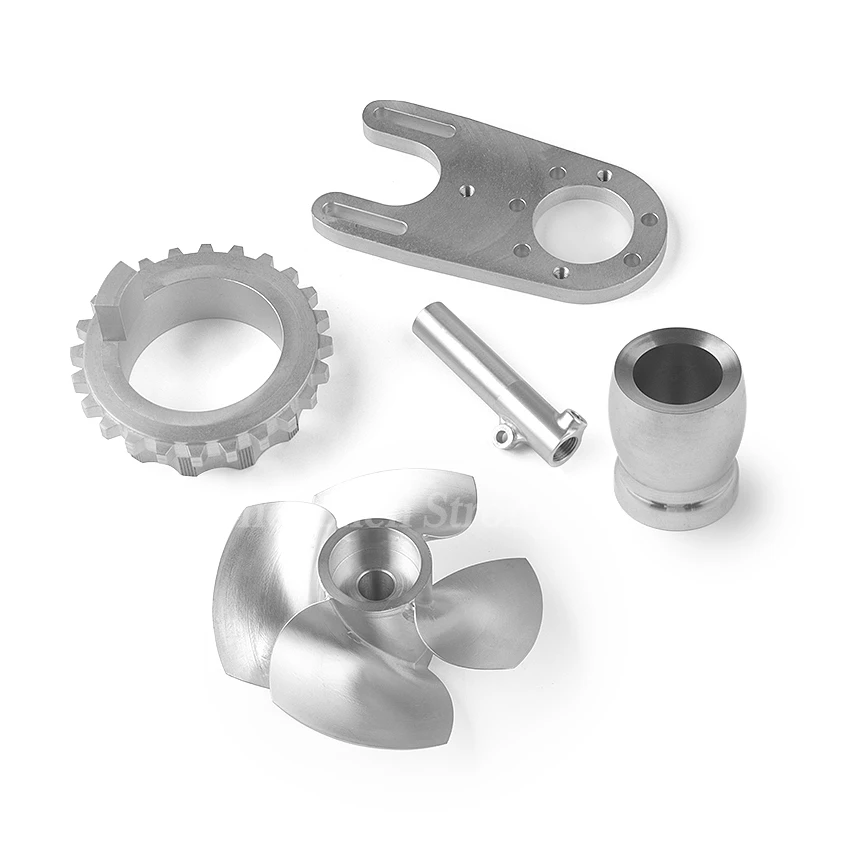

Hey there! As a supplier of SLA 3D model making, I've had my fair share of experience working with the aerospace industry. It's a super cool field with some really high - end requirements. So, let's dive into what it takes to make SLA 3D models for aerospace.
Precision and Accuracy
In the aerospace industry, precision is everything. You can't afford even the tiniest error when you're dealing with parts that are going to be used in aircraft or spacecraft. SLA 3D models need to be made with extremely high precision. The tolerances are often in the range of micrometers. This means that every little detail of the model has to be spot - on.
For example, if you're making a model of an engine component, the holes for bolts and the shape of the air intake channels need to be exact. Any deviation can lead to problems in the actual manufacturing process or, even worse, in the performance of the final product. To achieve this level of precision, we use high - end SLA printers that are calibrated regularly. These printers can create layers as thin as 25 micrometers, which allows for a very detailed and accurate model.
Material Properties
The materials used in SLA 3D model making for the aerospace industry have to meet some pretty strict standards. First of all, they need to be lightweight. Weight is a huge factor in aerospace, as less weight means better fuel efficiency and longer flight ranges.
At the same time, the materials have to be strong and durable. They need to withstand high temperatures, pressures, and vibrations. For instance, when an aircraft is flying at high altitudes, the parts are exposed to extreme cold and low - pressure environments. The SLA resin used for the models should be able to maintain its structural integrity under these conditions.
We often use specialized aerospace - grade resins that are formulated to have the right combination of properties. These resins are also resistant to chemicals and UV radiation, which is important considering the harsh conditions that aerospace components are exposed to. You can learn more about the materials used in 3D Resin Printing.
Surface Finish
A smooth surface finish is crucial for SLA 3D models in the aerospace industry. In aerodynamics, even the slightest roughness on a surface can cause drag, which reduces the efficiency of the aircraft or spacecraft. So, the models need to have a high - quality surface finish.
After the printing process, we use various post - processing techniques to achieve the desired surface finish. This can include sanding, polishing, and coating. Sanding helps to remove any rough edges or bumps on the surface of the model. Polishing gives the model a smooth and shiny appearance. And coating can provide additional protection and improve the surface properties.
Complex Geometries
The aerospace industry often requires parts with complex geometries. These can include internal channels, lattice structures, and curved surfaces. SLA 3D printing is great for creating these complex shapes because it can build the model layer by layer, allowing for a high degree of design freedom.
For example, some aerospace components have internal cooling channels that are very difficult to manufacture using traditional methods. With SLA 3D printing, we can create these channels with ease. However, when dealing with complex geometries, we need to pay special attention to support structures. These structures are used to hold up the overhanging parts of the model during the printing process. After printing, they need to be removed carefully to avoid damaging the model. You can check out some examples of 3D Printing Model Parts with complex geometries.
Certification and Quality Control
In the aerospace industry, certification is a must. All SLA 3D models need to meet certain industry standards and regulations. This means that we have to have a strict quality control process in place.
We start by inspecting the raw materials to make sure they meet the required specifications. During the printing process, we monitor the printer parameters to ensure that the model is being printed correctly. After printing, we use various inspection techniques such as 3D scanning and coordinate measuring machines (CMM) to check the dimensions and quality of the model.
Once the model passes all the quality control checks, we can provide the necessary certification documents. This gives our customers the confidence that the models they receive are of the highest quality and meet all the industry requirements.
Cost - Effectiveness
While precision, material properties, and quality are important, cost - effectiveness is also a major consideration in the aerospace industry. We understand that our customers need to keep their costs down without compromising on quality.
To achieve cost - effectiveness, we optimize our printing processes. This includes using the right amount of material, reducing printing time, and minimizing waste. We also work closely with our customers to understand their requirements and find the most cost - effective solutions. For example, if a customer needs a large number of models, we can use batch printing techniques to reduce the cost per unit. You can learn more about cost - effective 3D Printing Service ABS Plastic Rapid Prototype.
Lead Time
In the aerospace industry, time is often of the essence. Projects have strict deadlines, and delays can be very costly. So, we need to be able to deliver the SLA 3D models within a reasonable lead time.
We have a well - organized production process that allows us to minimize the lead time. We keep a stock of the most commonly used materials, which reduces the time needed to source them. Our printers are also running at high efficiency, which helps to speed up the printing process. And our experienced team can quickly handle any issues that may arise during production.


Conclusion
So, there you have it - the main requirements for SLA 3D model making in the aerospace industry. Precision, material properties, surface finish, complex geometries, certification, cost - effectiveness, and lead time are all important factors. As a supplier, we're constantly working to meet these requirements and provide the best possible service to our customers.
If you're in the aerospace industry and are looking for a reliable SLA 3D model making supplier, we'd love to hear from you. Whether you have a small project or a large - scale production, we have the expertise and resources to help you. Reach out to us to start a discussion about your specific needs and how we can work together to bring your aerospace projects to life.
References
- Smith, J. (2020). Advanced Manufacturing Techniques in Aerospace. Journal of Aerospace Engineering.
- Johnson, A. (2019). 3D Printing in the Aerospace Industry: Challenges and Opportunities. International Journal of Aerospace Technology.
- Brown, C. (2021). Quality Control in Aerospace Manufacturing. Aerospace Manufacturing Review.