
What is the training available for using SLS 3D printing service?
As a supplier of SLS 3D printing services, I understand that many clients may be unfamiliar with the process and operation of SLS 3D printing. That's why we offer comprehensive training programs to ensure that our clients can make the most of our services. In this blog post, I'll explore the various types of training available for using SLS 3D printing services.
1. Introduction to SLS 3D Printing
The first step in our training program is an introduction to SLS 3D printing. This session is designed for clients who are completely new to the technology. We cover the basic principles of SLS 3D printing, including how it works, the materials used, and its advantages over other 3D printing methods.
During this training, we explain that SLS (Selective Laser Sintering) is a powder - based 3D printing technology. A high - power laser selectively fuses powdered material, layer by layer, to create a three - dimensional object. The materials commonly used in SLS 3D printing include nylon, polycarbonate, and various composite powders.
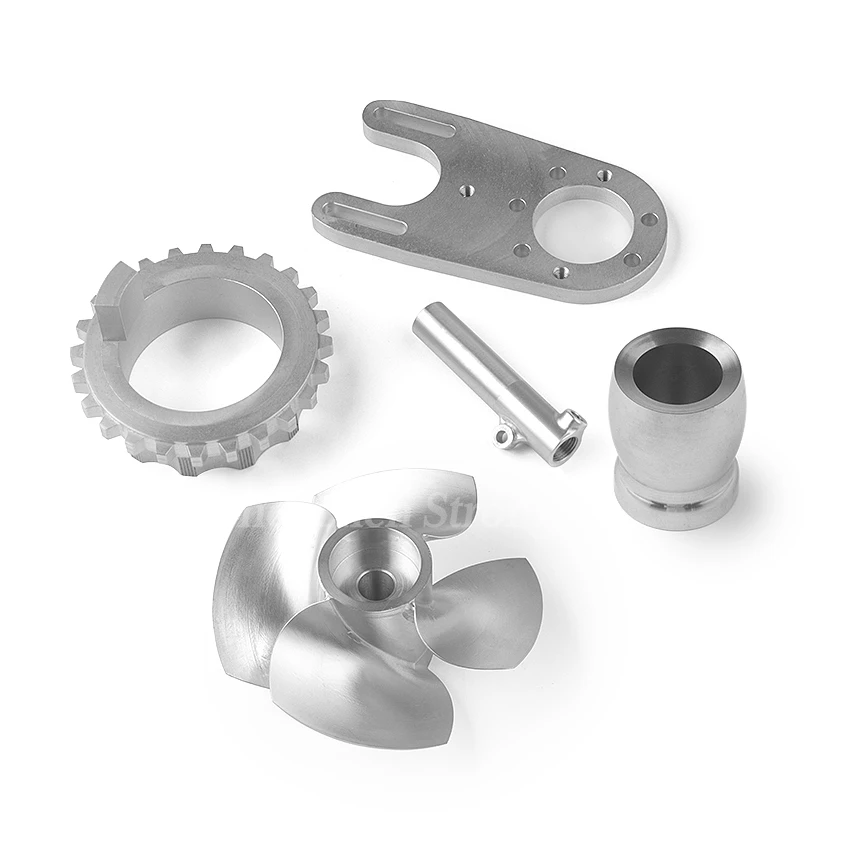
One of the main advantages of SLS 3D printing is its ability to produce complex geometries without the need for support structures. This makes it ideal for creating parts with internal channels, undercuts, and other intricate features. For more information on the types of models that can be created, you can visit our page on SLM 3D Printing Stainless Steel Model.
2. Design for SLS 3D Printing
Once clients have a basic understanding of SLS 3D printing, we move on to design training. Designing for SLS 3D printing is different from traditional manufacturing methods, and there are specific guidelines that need to be followed to ensure successful prints.
We teach clients about wall thickness requirements. In SLS 3D printing, walls should be thick enough to withstand the printing process but not so thick that they cause issues with heat dissipation. Generally, a minimum wall thickness of 0.8 - 1.5 mm is recommended, depending on the material used.
Another important aspect of design for SLS 3D printing is the consideration of powder removal. Since SLS printing uses powder, there needs to be a way for the unfused powder to be removed from the internal cavities of the printed part. We show clients how to design parts with appropriate access holes or channels for powder removal.
Our design training also includes tips on optimizing part orientation. The orientation of a part during printing can significantly affect its strength, surface finish, and print time. By choosing the right orientation, clients can improve the quality of their prints and reduce production costs. For those interested in customizing their SLS 3D printed parts, our Custom SLS 3D Printing service provides more options.
3. Material Selection and Properties
Understanding the different materials available for SLS 3D printing and their properties is crucial for clients. In this training session, we introduce clients to the various materials we offer, such as Nylon SLS Printing.
Nylon is one of the most popular materials for SLS 3D printing. It has excellent mechanical properties, including high strength, flexibility, and chemical resistance. Nylon parts are also lightweight and have a good surface finish. We discuss the different grades of nylon available and their specific applications, such as automotive parts, consumer products, and medical devices.
We also cover other materials like polycarbonate, which offers high heat resistance and transparency, and composite materials that combine the properties of different materials to achieve specific performance requirements. By the end of this training, clients will be able to select the most suitable material for their specific projects based on factors such as strength, flexibility, heat resistance, and cost.
4. Operating the SLS 3D Printing Equipment
For clients who want to have a more hands - on experience, we offer training on operating the SLS 3D printing equipment. This training is usually conducted in our facility, where clients can see the equipment up close and learn how to set up a print job.
We start by teaching clients how to prepare the 3D model for printing. This includes slicing the model into layers using specialized software. The slicing process determines the thickness of each layer, the laser power, and other printing parameters.
Next, we show clients how to load the powder into the printer and set up the build platform. We explain the importance of proper powder handling to ensure consistent print quality. During the printing process, clients learn how to monitor the printer, adjust the parameters if necessary, and troubleshoot common issues.
Finally, we teach clients how to remove the printed part from the build chamber and clean it. This involves carefully removing the excess powder and post - processing the part to achieve the desired surface finish and mechanical properties.
5. Post - Processing and Finishing
Post - processing is an important step in the SLS 3D printing workflow. In this training session, we cover the different post - processing techniques available, such as sanding, polishing, painting, and coating.
Sanding is a common post - processing method used to improve the surface finish of SLS 3D printed parts. By using different grits of sandpaper, clients can achieve a smooth and uniform surface. Polishing can further enhance the appearance of the part, giving it a shiny finish.
Painting and coating can be used to add color, protect the part from environmental factors, and improve its chemical resistance. We discuss the different types of paints and coatings available and the proper application techniques.


We also introduce clients to other post - processing options, such as heat treatment, which can improve the mechanical properties of the printed part, and ultrasonic cleaning, which is used to remove any remaining powder from the part's surface.
Contact for Procurement and Further Discussion
If you are interested in our SLS 3D printing services or would like to participate in our training programs, we encourage you to reach out to us. Our team of experts is ready to assist you with any questions you may have and guide you through the process of using SLS 3D printing for your projects. Whether you are a small - scale business looking to prototype a new product or a large - scale manufacturer seeking to optimize your production processes, our SLS 3D printing services and training can provide you with the solutions you need.
References
- Gibson, I., Rosen, D. W., & Stucker, B. (2010). Additive Manufacturing Technologies: Rapid Prototyping to Direct Digital Manufacturing. Springer.
- Wohlers, T., & Gornet, P. (2017). Wohlers Report 2017: 3D Printing and Additive Manufacturing State of the Industry. Wohlers Associates.