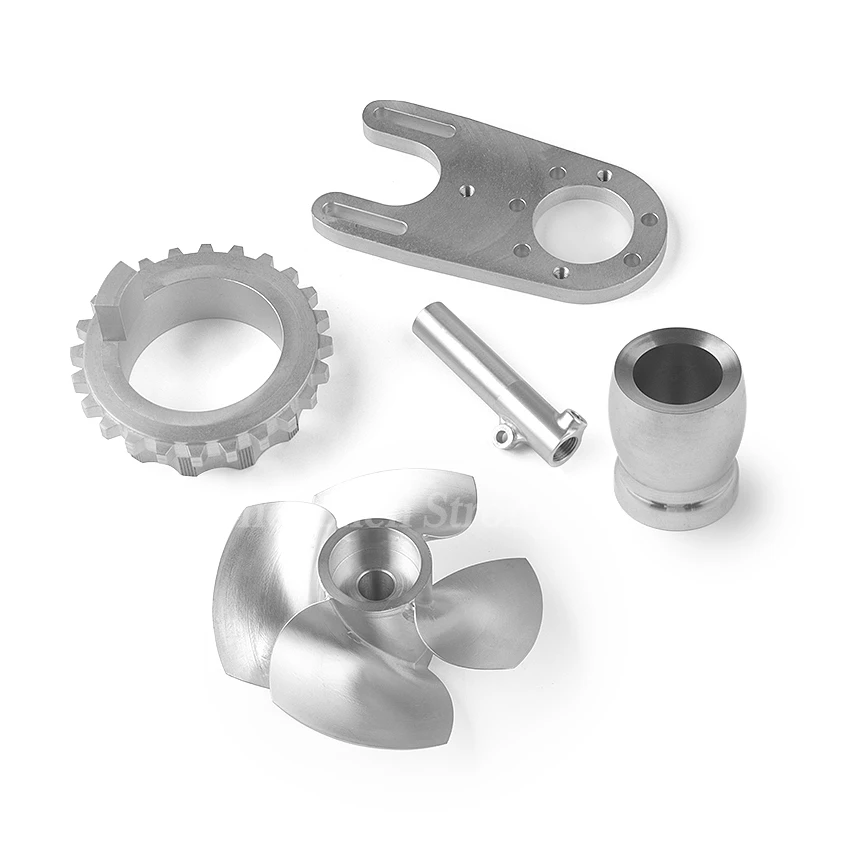

As a 3D printing provider, I often get asked about the differences between various 3D printing technologies, especially when it comes to surface finish. In this blog post, I'll delve into the disparities between Stereolithography (SLA) and Digital Light Processing (DLP) 3D printing in terms of surface finish.
Understanding SLA and DLP 3D Printing
Before we discuss the surface finish, let's briefly understand what SLA and DLP 3D printing are. SLA is one of the earliest 3D printing technologies. It uses a laser to cure liquid resin layer by layer. The laser precisely traces the cross - section of the object on the resin surface, solidifying it.
On the other hand, DLP is similar to SLA in that it also uses photopolymer resin. However, instead of a laser, DLP uses a digital light projector to project an entire layer of light onto the resin at once. This allows for faster printing times as an entire layer can be cured simultaneously.
Surface Finish in SLA 3D Printing
One of the hallmarks of SLA 3D printing is its ability to produce parts with a high - quality surface finish. The laser in SLA systems can be controlled with extreme precision. This precision enables it to create very fine details and smooth surfaces.
The layer lines in SLA - printed parts are often less visible compared to some other 3D printing methods. The smoothness of the surface is a result of the focused nature of the laser. The laser can cure the resin in a very controlled manner, filling in small gaps and creating a more uniform surface.
For applications where aesthetics are crucial, such as creating prototypes of consumer products or jewelry, SLA 3D printing is often a top choice. The smooth surface finish can give the parts a professional and polished look, making them suitable for display or presentation purposes.
However, the surface finish of SLA - printed parts can still be affected by factors such as the orientation of the part during printing. If a part is printed at an angle, the layer lines may become more prominent on certain surfaces. Additionally, post - processing steps are often required to achieve the best possible surface finish. Sanding, polishing, and painting can further enhance the smoothness and appearance of SLA - printed parts.

Surface Finish in DLP 3D Printing
DLP 3D printing also offers excellent surface finish capabilities. Since DLP projects an entire layer of light at once, it can create parts with a relatively smooth surface. The uniformity of the light projection across the resin layer helps in reducing the visibility of layer lines.
DLP - printed parts can have a consistent surface texture, which is beneficial for applications where a uniform appearance is desired. Similar to SLA, DLP is well - suited for creating detailed models and prototypes. The ability to cure an entire layer simultaneously also means that the surface has fewer interruptions between layers, contributing to a smoother overall finish.
However, DLP has its own set of challenges when it comes to surface finish. The resolution of DLP printers can vary, and lower - resolution printers may produce parts with slightly rougher surfaces. Also, the pixelation of the digital light projector can sometimes leave a subtle pattern on the surface of the printed part. This pattern may not be noticeable in all applications but can be a concern for projects that demand extremely high - quality surface finishes.
Comparing SLA and DLP Surface Finishes
When comparing the surface finishes of SLA and DLP 3D printing, it's important to note that both technologies can produce high - quality results. SLA, with its focused laser, may have an edge in creating extremely fine details and ultra - smooth surfaces. The laser's ability to precisely control the curing process allows for better manipulation of the resin at a microscopic level.
DLP, on the other hand, offers speed and a relatively consistent surface finish. The ability to cure an entire layer at once can result in fewer layer - related artifacts in some cases. However, the pixelation issue in DLP can be a drawback for applications that require a flawless surface.
In terms of post - processing, both SLA and DLP parts can benefit from similar techniques. Sanding, polishing, and coating can be used to improve the surface finish of parts printed with either technology. The choice between SLA and DLP may also depend on the specific requirements of the project, such as the size of the part, the level of detail needed, and the available budget.
Applications and Considerations
The surface finish differences between SLA and DLP have significant implications for various applications. For industries like jewelry making, where intricate details and a smooth surface are essential, SLA may be the preferred choice. The ability to capture fine details and create a polished surface can make SLA - printed jewelry prototypes look more like the final product.
In the automotive industry, both SLA and DLP can be used for creating prototypes of CNC Automotive Machining and CNC Auto Car Parts. However, if a large number of parts need to be produced quickly, DLP's faster printing speed may be advantageous. At the same time, SLA's superior surface finish may be preferred for parts that will be on display or require a high - end appearance.
For the robotics industry, especially when it comes to creating Humanoid Robot Joint Parts, the choice between SLA and DLP depends on the specific requirements of the joints. If the joints need to have a very smooth surface for reduced friction and wear, SLA may be the better option. But if the focus is on rapid prototyping and getting a functional part quickly, DLP could be considered.
Conclusion
In conclusion, both SLA and DLP 3D printing technologies have their own strengths and weaknesses when it comes to surface finish. SLA offers high - precision, fine - detail capabilities and a potentially smoother surface, while DLP provides speed and a relatively consistent finish. The choice between the two depends on the specific needs of your project, including the level of detail, surface quality requirements, production speed, and budget.
If you're in the market for 3D - printed parts and are unsure which technology is right for your application, we're here to help. Our team of experts can guide you through the process, from choosing the appropriate 3D printing technology to post - processing options. We understand that every project is unique, and we're committed to providing you with the best possible solutions. Contact us to discuss your requirements and start the journey towards high - quality 3D - printed parts.
References
- Gibson, I., Rosen, D. W., & Stucker, B. (2015). Additive Manufacturing Technologies: 3D Printing, Rapid Prototyping, and Direct Digital Manufacturing. Springer.
- Wohlers, T., & Gornet, P. (2020). Wohlers Report 2020: 3D Printing and Additive Manufacturing State of the Industry. Wohlers Associates.