
Hey everyone! As a provider of Vacuum Casting PC Parts, I've been getting a ton of questions lately about the quality differences between vacuum-cast and 3D-printed PC parts. So, I thought I'd dive deep into this topic and share some insights.
1. Basics of Vacuum Casting and 3D Printing
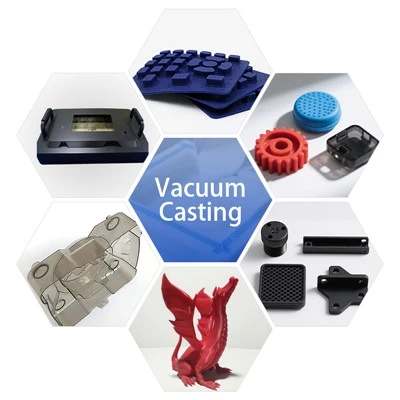
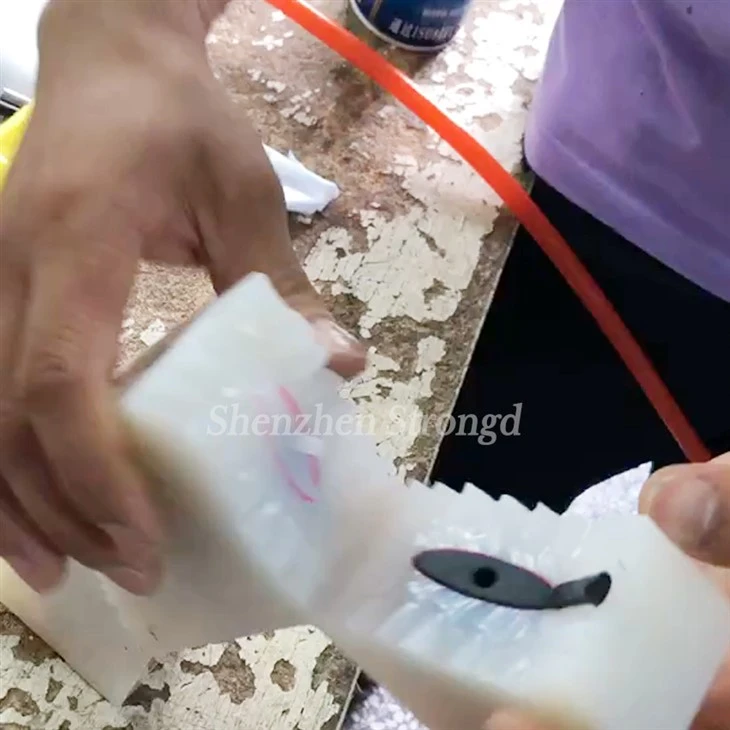
Let's start with the basics. Vacuum casting is a process where a mold is first created, usually from a master model. The mold is made of a silicone rubber, which is flexible and can capture fine details. Liquid resin is then poured into the mold under vacuum to remove air bubbles. Once the resin cures, you get a high - quality part that's an exact replica of the master model. You can find some great examples of vacuum - cast parts like Vacuum Casting Plastic Case, Vacuum Casting Components, and Vacuum Casting Soft Rapid Prototype.
On the other hand, 3D printing builds parts layer by layer. There are different types of 3D printing technologies, such as Fused Deposition Modeling (FDM), Stereolithography (SLA), and Selective Laser Sintering (SLS). Each technology uses different materials and methods to create the final product.
2. Surface Finish
One of the most noticeable differences between vacuum - cast and 3D - printed PC parts is the surface finish. Vacuum - cast parts typically have a smoother surface finish. Since the liquid resin fills the mold precisely, it can replicate the fine details of the master model, including smooth curves and sharp edges. The silicone mold also helps in producing a high - quality surface, often with a glossy appearance if that's the desired finish.
In contrast, 3D - printed parts can sometimes have a visible layer - by - layer texture, especially in FDM 3D printing. Even with post - processing like sanding, it can be challenging to achieve the same level of smoothness as a vacuum - cast part. SLA and SLS 3D printing can produce better surface finishes compared to FDM, but they still might not match the perfection of vacuum - cast parts in some cases.
3. Material Properties
The material properties of vacuum - cast and 3D - printed PC parts can vary significantly. Vacuum casting offers a wide range of resin options. These resins can be customized to have specific properties such as high strength, flexibility, heat resistance, and chemical resistance. For example, if you need a part that can withstand high temperatures in a PC, you can choose a heat - resistant resin for vacuum casting.

3D - printed parts use materials like plastics (e.g., PLA, ABS), metals, and ceramics. The properties of these materials depend on the specific 3D printing technology and the material itself. For instance, FDM - printed parts made of ABS plastic are relatively strong but might be more brittle compared to some vacuum - cast parts made from specialized resins. SLS - printed parts made of nylon can have good strength and durability, but they may not have the same chemical resistance as some vacuum - cast resins.
4. Dimensional Accuracy
Dimensional accuracy is crucial when it comes to PC parts. Vacuum casting generally offers high dimensional accuracy. The mold ensures that each part is made to the exact specifications of the master model. The shrinkage rate of the resin during the curing process can be controlled and compensated for, resulting in parts that fit precisely in the PC assembly.
3D printing also has good dimensional accuracy, but it can be affected by various factors. In FDM 3D printing, factors like the nozzle diameter, print speed, and temperature can influence the final dimensions of the part. SLA and SLS printing usually offer better accuracy than FDM, but they can still have some minor variances. Sometimes, the orientation of the part during printing can also impact its dimensional accuracy.
5. Production Volume
When it comes to production volume, there's a big difference between the two methods. Vacuum casting is great for small to medium - scale production. Once the mold is made, it can be used to produce multiple parts quickly. The turnaround time for producing a batch of vacuum - cast parts is relatively short, especially when compared to some manufacturing methods. However, the mold has a limited lifespan, and after a certain number of casts, it may need to be replaced.
3D printing is more suitable for low - volume production or prototyping. Printing each part takes time, and as the production volume increases, the time and cost can become prohibitive. However, 3D printing is very flexible, and you can easily change the design of the part without having to make a new mold like in vacuum casting.
6. Cost
Cost is an important consideration for any PC part production. The initial cost of vacuum casting is relatively high because you need to create the master model and the silicone mold. However, as the production volume increases, the cost per part decreases significantly. This makes vacuum casting cost - effective for small to medium - scale production.
3D printing has a lower initial cost since there's no need for mold making. But for large - scale production, the cost per part is relatively high due to the time and material consumption. So, if you're looking to produce a small number of PC parts, 3D printing might be a more economical choice, while for larger quantities, vacuum casting is usually the better option.
Conclusion and Call to Action
In conclusion, both vacuum casting and 3D printing have their own advantages and disadvantages when it comes to the quality of PC parts. Vacuum casting offers better surface finish, a wide range of material properties, high dimensional accuracy, and is more cost - effective for medium - scale production. 3D printing, on the other hand, is great for prototyping and low - volume production, with the advantage of design flexibility.
If you're in the market for high - quality Vacuum Casting PC Parts, I'd love to have a chat with you. Whether you're looking for a Vacuum Casting Plastic Case, Vacuum Casting Components, or Vacuum Casting Soft Rapid Prototype, we've got you covered. Reach out to us to discuss your requirements and get a quote.
References
- Gibson, I., Rosen, D. W., & Stucker, B. (2015). Additive Manufacturing Technologies: 3D Printing, Rapid Prototyping, and Direct Digital Manufacturing. Springer.
- Campbell, I. M., Evans, G. M., & Hutchinson, J. M. (2003). Rapid Prototyping and Manufacturing: Fundamentals of Stereolithography. Kluwer Academic Publishers.